
More than half of british companies report significant drops in website performance after an ill-planned migration. Moving a digital presence is one of the most significant shifts an organisation can face, impacting everything from online visibility to customer trust. This guide reveals what counts as a website migration, why these transitions matter for british businesses, and the specific objectives that set the stage for a smooth and secure change.
Table of Contents
- Defining Website Migration and Key Objectives
- Types of Website Migrations and Key Differences
- Core Steps in a Website Migration Checklist
- SEO and Technical Prerequisites to Prepare
- Common Migration Risks and How to Avoid Them
Key Takeaways
| Point | Details |
|---|---|
| Website Migration Objectives | Successful migration involves performance optimisation, scalability, security enhancement, and design modernisation. |
| Types of Migrations | Choose an appropriate migration method (total, partial, distributed, aggregating, or multiple) based on specific organisational needs. |
| Comprehensive Planning | A detailed checklist covering pre-migration assessment, technical preparation, content migration, testing, and post-migration validation is essential. |
| Mitigating Migration Risks | Implement proactive mitigation strategies for SEO, technical infrastructure, and resource allocation risks to ensure a smooth transition. |
Defining Website Migration and Key Objectives
Website migration represents a strategic digital transformation process where businesses transfer their entire web presence from one technological environment to another. This complex undertaking involves carefully moving critical digital assets like HTML files, databases, scripts, applications, and media content while maintaining operational integrity and performance standards.
The fundamental objectives of website migration extend far beyond simple relocation. Organisations pursue these digital transitions to enhance performance and technological capabilities, addressing emerging business requirements and technological advancements. Key strategic goals typically include:
- Performance Optimisation: Improving website speed, responsiveness, and user experience
- Scalability Enhancement: Creating infrastructure capable of supporting business growth
- Security Improvement: Implementing robust technological frameworks
- Design Modernisation: Ensuring responsive and contemporary digital interfaces
Successful website migration demands meticulous planning and execution. Businesses must carefully evaluate their current digital infrastructure, anticipate potential challenges, and develop comprehensive transition strategies that minimise operational disruption. This process requires collaboration between technical teams, digital strategists, and stakeholders to ensure a seamless technological transformation that aligns with broader organisational objectives.

Types of Website Migrations and Key Differences
Website migrations are not a one-size-fits-all process. Different migration strategies reflect varied technological and organisational needs, each presenting unique challenges and opportunities for businesses seeking digital transformation. Understanding these variations helps organisations select the most appropriate approach for their specific technological ecosystem.
Primary types of website migrations include:
- Total Migration: Complete transfer of entire website infrastructure, including design, functionality, and underlying technology stack
- Partial Migration: Selective transfer of specific website components or sections
- Distributed Migration: Spreading website elements across multiple platforms or servers
- Aggregating Migration: Consolidating multiple websites or digital platforms into a unified system
- Multiple Migration: Complex transitions involving simultaneous changes across several digital properties
Each migration type demands a tailored strategy, considering factors like existing technological infrastructure, business objectives, performance requirements, and potential operational disruptions. Technical teams must carefully assess the specific characteristics of their digital ecosystem to determine the most suitable migration approach, ensuring minimal downtime and maintaining data integrity throughout the transition process.
Successful website migrations require comprehensive planning, robust technical expertise, and a strategic approach that balances technological innovation with operational stability. By understanding the nuanced differences between migration types, businesses can develop more effective transformation strategies that align with their broader digital development goals.
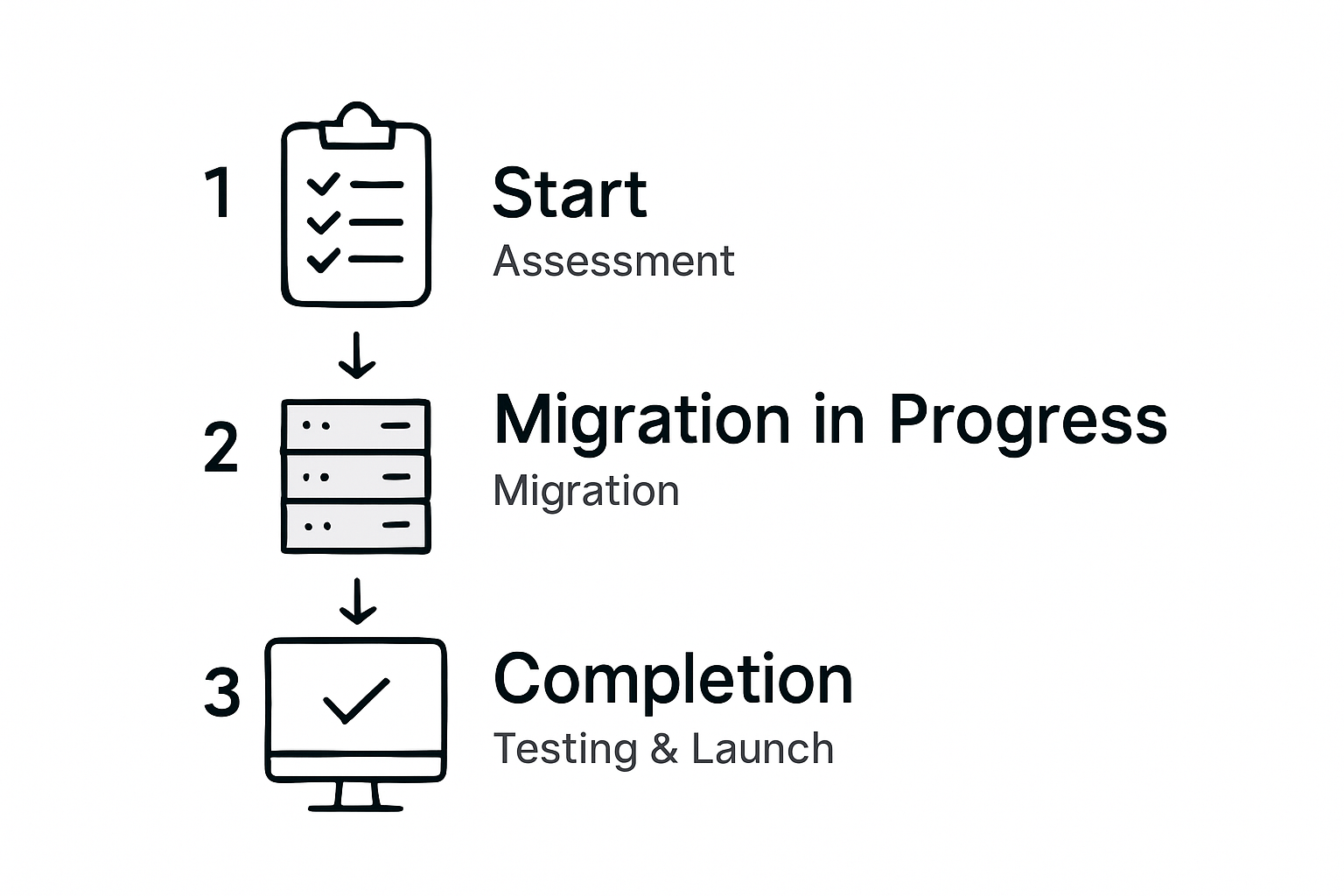
Core Steps in a Website Migration Checklist
Website migration represents a complex technological endeavour that demands meticulous planning and systematic execution. Businesses can ensure a smooth digital transition by following a comprehensive migration checklist that addresses technical, operational, and strategic considerations.
Essential steps in an effective website migration process include:
- Pre-Migration Assessment
- Conduct thorough website audit
- Document existing website architecture
- Identify critical functionalities and dependencies
- Evaluate current performance metrics
- Technical Preparation
- Select appropriate migration methodology
- Backup entire existing website infrastructure
- Configure staging environment for testing
- Develop comprehensive migration strategy
- Content and Data Migration
- Transfer all website content systematically
- Validate data integrity during transfer
- Preserve URL structures and redirects
- Migrate databases with minimal disruption
- Performance and Compatibility Testing
- Conduct extensive functionality tests
- Verify cross-browser and cross-device compatibility
- Check loading speeds and responsiveness
- Validate SEO elements and metadata
- Post-Migration Validation
- Monitor website performance after migration
- Address any emerging technical issues
- Verify all functionalities are operational
- Implement necessary optimisations
Successful website migrations require a holistic approach that balances technical precision with strategic foresight. Technical teams must remain adaptable, anticipating potential challenges and developing robust contingency plans. By breaking down the migration process into systematic, manageable steps, organisations can minimise risks and ensure a seamless digital transformation that supports their broader technological objectives.
SEO and Technical Prerequisites to Prepare
Preparing for a website migration demands comprehensive technical and search engine optimisation groundwork to ensure minimal disruption and maintained digital performance. Implementing best practices for website development provides a robust foundation for seamless digital transformation.
Key SEO and technical prerequisites include:
Technical Infrastructure Preparation
- Conduct comprehensive website performance audit
- Analyse current hosting environment and server configurations
- Evaluate current website speed and technical performance metrics
- Identify potential compatibility issues between existing and new platforms
Search Engine Optimisation Readiness
- Create comprehensive URL mapping strategy
- Preserve existing search engine rankings
- Implement 301 permanent redirects for all critical pages
- Maintain current metadata and semantic structure
Content and Structural Integrity
- Audit existing content for relevance and quality
- Document current site architecture and internal linking structure
- Ensure consistent URL structures and canonical tags
- Validate structured data and schema markup
Security and Compliance Considerations
- Review SSL certificate requirements
- Verify compliance with current web security standards
- Assess data protection and privacy configurations
- Plan for seamless security transition during migration
Successful website migrations require meticulous preparation that balances technical complexity with strategic foresight. Technical teams must approach the process as a holistic transformation, anticipating potential challenges and developing robust contingency plans that protect digital assets and maintain operational continuity.
Common Migration Risks and How to Avoid Them
Website migrations represent complex technological transitions fraught with potential challenges that can significantly disrupt business operations. Understanding and proactively mitigating common migration risks is crucial for maintaining digital performance and operational continuity.
Key migration risks and strategic mitigation approaches include:
SEO and Search Performance Risks
- Potential dramatic ranking drops
- Loss of historical search engine credibility
- Broken internal and external link structures
- Unintended removal of critical metadata
Mitigation Strategies
- Implement comprehensive 301 redirect mapping
- Maintain identical URL structures where possible
- Preserve existing metadata and semantic markup
- Conduct thorough pre and post-migration SEO audits
Technical Infrastructure Risks
- Extended website downtime
- Database corruption or data loss
- Compatibility issues between platforms
- Performance degradation
Mitigation Approaches
- Create complete backup of existing infrastructure
- Develop staged migration plan with rollback options
- Perform extensive compatibility testing
- Utilise staging environments for comprehensive validation
Cost and Resource Allocation Risks
- Unexpected budget overruns
- Extended migration timelines
- Unplanned technical complications
- Resource allocation challenges
Risk Management Techniques
- Develop detailed migration budget with contingency
- Allocate additional time for unexpected challenges
- Engage experienced migration specialists
- Implement phased migration approach
Successful website migrations demand meticulous planning, technical expertise, and a strategic approach that anticipates and mitigates potential disruptions. By implementing comprehensive risk management strategies, organisations can transform potential challenges into opportunities for technological advancement and digital optimisation.
Simplify Your Website Migration with Expert Automation and Strategy
Website migration can feel overwhelming when faced with the complexity of preserving SEO, ensuring zero downtime, and maintaining data integrity. This article highlights crucial challenges such as SEO risks, technical infrastructure issues, and the need for meticulous planning. If you recognise the anxiety of managing a detailed migration checklist while avoiding costly errors, you are not alone. Businesses aiming to transform their digital presence require trustworthy partners who specialise in scalable, automated solutions designed to streamline these processes.
At Fame Razak, we understand the critical need for organised workflows and intelligent systems during such transformative projects. Our expertise in automating client onboarding, scheduling, and digital operations helps you focus on what matters most without getting bogged down by technical complexities. Discover practical ways to harness automation that aligns perfectly with your website migration goals and business growth. Explore how to turn everyday tasks into efficient, scalable routines by visiting Fame Razak today and start your seamless migration journey with confidence.
Frequently Asked Questions
What is website migration?
Website migration is a comprehensive process where businesses transfer their online presence from one technological environment to another, involving the careful movement of digital assets like HTML files, databases, and media content.
What are the key objectives of website migration?
Key objectives include enhancing website performance, improving technological capabilities, boosting scalability, ensuring security, and modernising design for a better user experience.
What are the essential steps to include in a website migration checklist?
Essential steps include conducting a pre-migration assessment, preparing the technical environment, migrating content and data, testing for performance and compatibility, and validating the website post-migration.
What are common risks associated with website migration and how can they be mitigated?
Common risks include SEO ranking drops, technical downtime, and data loss. Mitigation strategies involve implementing 301 redirects, creating backups, developing a phased migration plan, and conducting thorough pre and post-migration audits.
Recommended
- Complete Site Migration Checklist for Seamless Website Moves – Fame Razak
- Secure Website Deployment Steps for Small Businesses – Fame Razak
- 7 Best Practices in Website Development for Small Businesses – Fame Razak
- How to Plan Multisite Builds for Scalable Business Success – Fame Razak
- Top Workshop Organization Tips for Diesel Injection Technicians 2025 – My WordPress