
Website Localisation Guide for Better Client Engagement
More than 60 percent of British consumers say they are more likely to choose a service when the website feels personal and locally relevant. For digital marketing managers in London service businesses, localising your site goes far beyond translation. This guide breaks down proven steps that align with British user expectations, helping you turn your clinic’s online presence into a trusted local choice.
Table of Contents
- Step 1: Audit Existing Site For Localisation Needs
- Step 2: Identify Target Languages And Regional Specifics
- Step 3: Translate And Adapt Site Content
- Step 4: Integrate Cultural And Technical Localisation
- Step 5: Test Localisation For Accuracy And Performance
- Step 6: Optimise Site For Enhanced Local Engagement
Quick Summary
| Key Point | Explanation |
|---|---|
| 1. Conduct a thorough localisation audit | Review your website for language, culture, technology, and legal compliance to identify areas for improvement. |
| 2. Identify target languages strategically | Focus on the languages and regional contexts that align with your business goals for better engagement. |
| 3. Adapt content accurately for cultures | Work with native translators to ensure content reflects local nuances while preserving the original message. |
| 4. Implement comprehensive localisation testing | Validate your website for linguistic accuracy, functionality, and cultural relevance to ensure an optimal user experience. |
| 5. Enhance local engagement tactics | Leverage localised content, community participation features, and geotargeting for a more personalised visitor experience. |
Step 1: Audit existing site for localisation needs
Localising your website demands a strategic audit of your current digital infrastructure to identify potential barriers and opportunities for international engagement. Understanding the global data localisation trends helps pinpoint precisely where your website needs adaptation.
Start by conducting a comprehensive content review across four critical dimensions: language accessibility, cultural relevance, technical infrastructure, and legal compliance. Examine every page meticulously for elements that might alienate or confuse international audiences. This includes analysing text for idioms or region-specific references, checking image appropriateness, reviewing colour schemes that might carry unintended cultural meanings, and ensuring your site navigation feels intuitive for different user expectations.
Your technical audit should assess website performance across various international network conditions, validate multilingual character support, and verify that your content management system can handle different character sets and text directions. Pay special attention to form fields, ensuring they accommodate international name formats, address structures, and phone number variations.
Professional suggestion: Create a standardised localisation audit checklist to systematically track and resolve potential international user experience barriers.
Here is a summary comparing key dimensions of a successful localisation strategy:
| Dimension | Practical Focus | Strategic Benefit |
|---|---|---|
| Language Accessibility | Multilingual content support | Broader global reach |
| Cultural Relevance | Visual and contextual adaptation | Increased audience resonance |
| Technical Infrastructure | Multi-region performance | Reliable user experience |
| Legal Compliance | Adherence to local standards | Reduced legal risk |
Step 2: Identify target languages and regional specifics
Effectively localising your website requires strategic identification of the specific languages and cultural contexts you want to engage. Language localisation extends far beyond simple translation, demanding a nuanced understanding of regional linguistic and cultural variations that impact user experience and engagement.
Begin by conducting comprehensive market research to pinpoint your potential international audiences. Analyse your current website traffic analytics to reveal existing international user patterns. Look for countries and regions showing significant visitor numbers or strategic business potential. Consider factors like economic growth potential, market size, language prevalence, and alignment with your business goals. Pay close attention to not just primary languages but also regional dialects and linguistic variations that might require specialised content approaches.

Your language selection process should involve detailed cultural mapping. Understanding regional language nuances and communication preferences helps create more authentic and resonant content. This means examining not just linguistic translation but cultural context including idioms, communication styles, visual preferences, and social norms that differ across regions. Prioritise languages that offer the most strategic alignment with your business objectives and demonstrate clear potential for meaningful user engagement.
Professional suggestion: Develop a prioritised language expansion roadmap that balances market potential with your resource capabilities for creating high-quality localised content.
Step 3: Translate and adapt site content
Translating your website requires far more than word-for-word conversion. Effective content adaptation preserves semantic integrity while respecting cultural nuances, ensuring your message resonates authentically with international audiences.
Begin by preparing comprehensive translation resources including glossaries, style guides, and reference materials specific to each target language. Work with professional translators who are native speakers and understand your industry context. They should not merely translate text but reimagine your content through the cultural lens of the target audience. This means adjusting idioms, references, humour, and visual metaphors to maintain the original intent while feeling natural to local readers.
Take a strategic approach to website translation that goes beyond linguistic conversion. Consider technical aspects like text expansion or contraction in different languages, ensure your content management system supports multilingual character sets, and validate that page layouts accommodate varying text lengths. Pay special attention to formatting elements such as dates, currencies, and contact information to reflect regional standards precisely.
Professional suggestion: Create a comprehensive translation memory database to maintain consistency and reduce translation costs across future content updates.
Step 4: Integrate cultural and technical localisation
Successful website localisation requires seamlessly blending cultural sensitivity with robust technical infrastructure. Comprehensive localization strategies balance technological innovation with cultural preservation, ensuring your digital presence resonates authentically across different markets.
Develop a multifaceted approach that goes beyond surface translation. Integrate detailed cultural considerations with technical adaptations to create a truly localised user experience. This means examining every element of your website through a cultural lens. Review visual imagery for cultural appropriateness, validate colour schemes for regional significance, and ensure icons and symbols communicate the intended meaning across different cultural contexts. Technical considerations should include supporting local character sets, accommodating text expansion or contraction, and implementing region specific formatting for dates, currencies, and contact information.
Establish comprehensive style guides for each target language that provide clear guidelines on tone, terminology, and cultural nuances. These guides should help your translation team maintain brand consistency while adapting content to feel natural and engaging for local audiences. Pay special attention to legal and regulatory requirements specific to each region, ensuring your website not only communicates effectively but also complies with local digital standards and user expectations.
Professional suggestion: Create a cross functional localisation team that includes cultural experts, technical specialists, and native language professionals to ensure holistic website adaptation.
Step 5: Test localisation for accuracy and performance
Localization testing represents a critical validation process that ensures your website delivers an authentic and technically sound user experience across different cultural contexts. This comprehensive assessment goes beyond simple translation verification.
Deploy a multifaceted testing strategy that combines automated and manual approaches. Conduct thorough testing that evaluates linguistic accuracy, functional performance, and cultural resonance, examining every aspect of your localised website. Engage native speaking testers who can provide nuanced insights into language fluency, cultural appropriateness, and subtle contextual details that automated tools might miss. Your testing protocol should encompass functional validation checking that all features operate correctly, visual layout assessments to confirm design integrity, and linguistic reviews to validate translation quality and contextual accuracy.
Prioritise testing across multiple dimensions: technical functionality, linguistic precision, user interface responsiveness, and cultural alignment. Verify that forms, buttons, navigation elements, and interactive components function seamlessly in each language. Check for text rendering issues, validate character set support, and ensure that localised content maintains the same user experience standards as your original website. Pay particular attention to region specific elements like date formats, currency displays, and contact information to guarantee they reflect local conventions accurately.
Professional suggestion: Create a comprehensive testing checklist that covers linguistic, functional, and cultural evaluation criteria to systematically validate your localised website.
The following table outlines common localisation testing types and their distinct value for website adaptation:
| Testing Type | Key Objective | Business Value |
|---|---|---|
| Linguistic Review | Ensure flawless translation quality | Strong regional credibility |
| Functional Testing | Verify operational site features | Minimise user frustration |
| Cultural Assessment | Confirm appropriateness of content | Enhanced user satisfaction |
| Visual Layout Check | Validate design integrity | Preserve professional image |
Step 6: Optimise site for enhanced local engagement
Strategic local engagement approaches transform websites from generic platforms to community focused resources, creating meaningful connections with your target regional audiences. This process involves thoughtfully integrating local context, preferences, and expectations into your digital presence.
Boosting local engagement requires a multifaceted digital strategy that goes beyond simple translation. Implement personalised content elements that speak directly to local audiences such as region specific testimonials, localised imagery that reflects community characteristics, and language that resonates with regional communication styles. Consider integrating location based features like local contact information, region specific service offerings, and content that demonstrates your understanding of local market nuances. Leverage local keywords, create region specific landing pages, and develop content that addresses specific local challenges or interests.
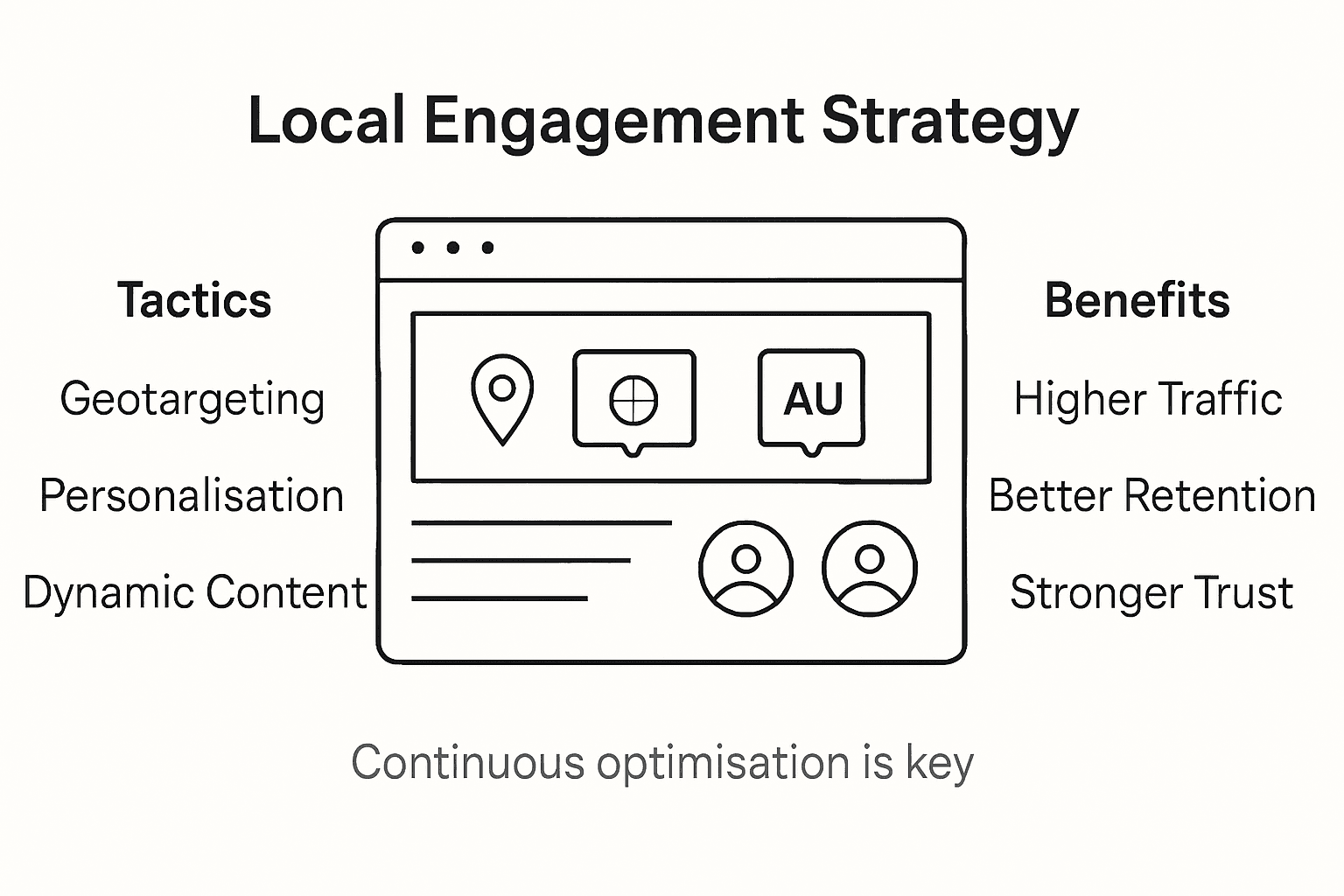
Utilise advanced digital tools to enhance local user experience. Incorporate geotargeting technologies that automatically adjust content based on user location, implement locally relevant schema markup for improved search visibility, and ensure your website loads quickly with region specific content delivery networks. Develop interactive elements that encourage local community participation such as region specific comment sections, local event calendars, or community feedback mechanisms that demonstrate your commitment to understanding and serving local audiences.
Professional suggestion: Develop a dynamic local engagement framework that allows continuous refinement of your website based on regional user feedback and interaction metrics.
Unlock Seamless Website Localisation with Smart Automation
Struggling with the complex steps of website localisation like auditing for cultural relevance or managing multilingual content adaptation? The process described in the guide highlights common challenges such as ensuring legal compliance, maintaining linguistic accuracy, and integrating technical localisation that can easily slow down your progress and drain your resources. Fame Razak understands these pain points and offers tailored automation solutions that streamline client onboarding, scheduling, and workflow orchestration so your team can focus on creating engaging, localised experiences that resonate globally.
Empower your localisation strategy today by automating the repetitive tasks that hold you back. From managing translation memories effectively to testing localisation accuracy across markets, our AI-driven tools help you reduce errors and enhance performance. Visit Fame Razak to explore practical solutions designed to turn your website localisation challenges into scalable, intelligent workflows. Don’t wait to elevate your international reach – take the next step and discover how to accelerate localisation with automation now at Fame Razak.
Frequently Asked Questions
What is the first step in the website localisation process?
Start with an audit of your existing site to identify localisation needs. Conduct a thorough review of content, language support, cultural relevance, and technical infrastructure, and create a localisation audit checklist to address any barriers.
How do I select target languages for my website localisation?
Identify target languages by conducting market research and analysing website traffic for international user patterns. Prioritise languages based on economic potential and alignment with your business goals to ensure effective engagement.
What factors should I consider when adapting content during translation?
Focus on cultural nuances and context rather than just translation. Work with native speakers to ensure that idioms, humour, and visual metaphors resonate with the local audience, preserving the original message while making it feel natural.
How can I test the accuracy of my localised website?
Implement a testing strategy that includes both automated and manual checks for linguistic accuracy and functional performance. Engage native speakers to provide insights on cultural appropriateness and perform thorough reviews of functionality and layout across all languages.
What strategies can enhance local engagement on my website?
Personalise content to reflect regional characteristics, such as local testimonials and imagery. Additionally, incorporate location-based features and geotargeting to ensure that content is relevant and engaging specific to your local audience preferences.
Recommended
- 7 Web Dev Best Practices Every Small Business Needs – Fame Razak
- 7 Front End Design Examples Every Small Business Should Try – Fame Razak
- Compliance Checklist for Global Sites: Step-by-Step Guide – Fame Razak
- 7 Best Practices in Website Development for Small Businesses – Fame Razak
- Understanding Landing Pages: What They Are and Why They Matter | Gammatica
- How to Optimize Your Video Content for Your Mobile Audience – Kicker Video