
Why Manage Web Risk: Safeguarding Agency Automation
Nearly half of British digital agencies report increased cyber threats as workflow automation expands. Protecting client data while navigating complex regulations has become a daily concern for London-based agency owners. This guide clarifies essential web risk management principles and practical strategies so your team can confidently automate onboarding and everyday operations without sacrificing security.
Table of Contents
- Web Risk Management: Definition And Core Concepts
- Types Of Web Risk Facing Agencies
- Impact Of AI And Automation On Risk
- UK Compliance And Legal Responsibilities
- Roles And Mistakes In Managing Web Risk
- Best Practices For Risk Mitigation And Workflow Automation
Key Takeaways
| Point | Details |
|---|---|
| Web Risk Management Fundamentals | A systematic approach is essential for digital agencies to identify and mitigate vulnerabilities while ensuring data security and operational integrity. |
| Types of Web Risks | Digital agencies face operational, technical, strategic, and external threats that require tailored monitoring and mitigation strategies. |
| AI and Automation Impacts | Integrating AI introduces new risks, such as algorithmic bias and privacy issues, necessitating comprehensive governance and risk assessment frameworks. |
| Compliance in the UK | Adhering to regulations like the Data Protection Act 2018 is critical, with leadership responsible for ensuring ongoing compliance and robust documentation. |
Web risk management: definition and core concepts
Web risk management represents a systematic approach for digital agencies to identify, assess, and mitigate potential vulnerabilities within their technological infrastructure and operational processes. At its core, this practice involves understanding and strategically addressing potential threats that could compromise system integrity, data security, and organisational objectives.
The fundamental framework of web risk management builds upon established industry standards, drawing from comprehensive risk identification methodologies. These methodologies are not about eliminating risks entirely, but developing a nuanced strategy to evaluate, prioritise, and effectively manage potential challenges. Key components include thorough vulnerability assessment, threat analysis, and creating robust mitigation protocols tailored to an organisation’s specific digital ecosystem.
Effective web risk management requires a multifaceted approach that encompasses technical, procedural, and human elements. Agencies must develop a comprehensive understanding of their digital landscape, including potential entry points for cyber threats, system vulnerabilities, and potential impact zones. This involves continuous monitoring, regular security audits, and implementing adaptive risk management strategies that evolve alongside emerging technological challenges.
Pro tip: Develop a dynamic risk register that tracks potential vulnerabilities, their potential impact, and mitigation strategies, updating it quarterly to maintain current threat awareness.
Types of web risk facing agencies
Digital agencies encounter a complex landscape of web risks that can significantly impact their operational effectiveness and organisational security. Critical web vulnerabilities span multiple domains, ranging from technical infrastructure challenges to human-driven procedural risks that can compromise system integrity and data protection.
These risks can be categorised into several key types. Operational risks emerge from internal process failures, human error, or inefficient workflows that create potential security gaps. Technical risks involve specific vulnerabilities within digital systems, including outdated software components, misconfigured network settings, and unpatched security weaknesses. Strategic risks relate to broader decision-making challenges that might expose an agency to unintended technological vulnerabilities or compliance challenges.
External threat landscapes present additional complexity for agencies. Cybersecurity challenges include sophisticated injection attacks, potential breaches of access control mechanisms, cryptographic failures, and configuration errors that malicious actors could exploit. Each risk category demands a targeted approach, requiring continuous monitoring, proactive assessment, and adaptive security strategies that evolve alongside emerging technological threats.
Here is a summary contrasting key types of web risk faced by digital agencies:
| Risk Type | Main Cause | Typical Manifestation | Potential Impact |
|---|---|---|---|
| Operational | Internal process flaws | Unauthorised access through error | Service disruption |
| Technical | System vulnerabilities | Exploited outdated software | Data breaches |
| Strategic | Poor decision-making | Insufficient compliance measures | Regulatory penalties |
| External Threats | Malicious actors | Injection or access control attacks | Reputational damage |
Pro tip: Conduct quarterly comprehensive risk assessments that systematically map and evaluate potential vulnerabilities across operational, technical, and strategic domains.
Impact of AI and automation on risk
The integration of artificial intelligence and automation into digital agency operations presents a complex landscape of transformative opportunities and emerging technological risks. Algorithmic innovations introduce dynamic risk profiles that challenge traditional risk management approaches, requiring agencies to develop sophisticated strategies for identifying and mitigating potential vulnerabilities.

AI-driven systems introduce multifaceted risks across several critical dimensions. Algorithmic bias represents a significant concern, where automated decision-making processes can inadvertently perpetuate systemic prejudices or generate skewed outcomes. Transparency challenges emerge as machine learning models become increasingly complex, making it difficult to understand precisely how decisions are generated. Privacy risks also escalate, with automated systems potentially collecting and processing sensitive information in ways that might compromise individual data protection standards.
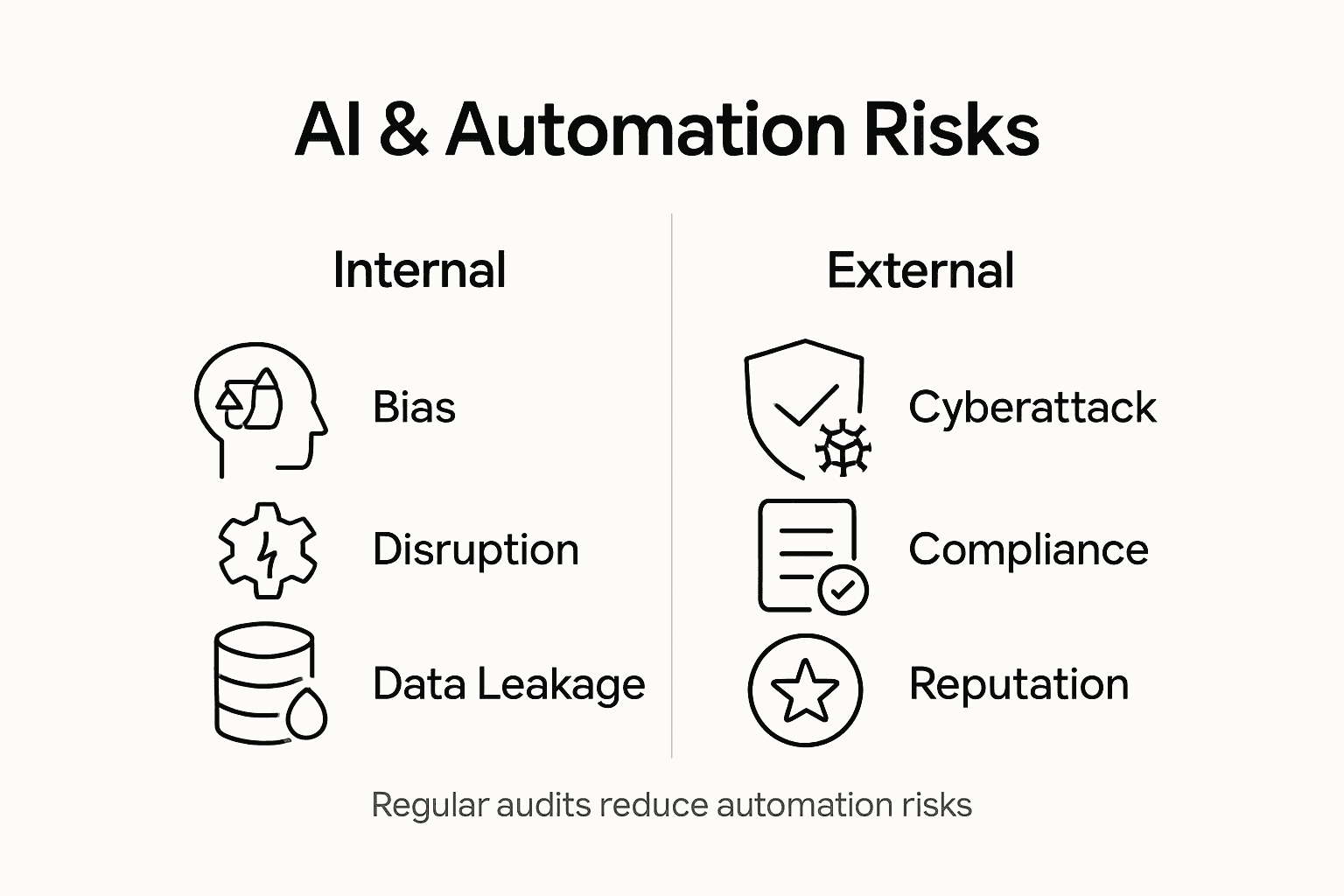
Beyond technical considerations, AI and automation present profound strategic risks for digital agencies. Workforce displacement, reduced human oversight, and potential accountability gaps represent significant organisational challenges. Agencies must develop robust governance frameworks that balance technological innovation with ethical considerations, ensuring that automated systems remain accountable, transparent, and aligned with fundamental organisational values and regulatory requirements.
Pro tip: Implement a comprehensive AI risk assessment framework that includes regular algorithmic audits, bias testing, and continuous monitoring of automated decision-making processes.
UK compliance and legal responsibilities
Digital agencies operating in the United Kingdom must navigate a complex landscape of legal obligations that govern cybersecurity, data protection, and operational resilience. Comprehensive legislative frameworks mandate rigorous compliance standards for organisations handling digital infrastructure and sensitive information, with significant implications for risk management and technological implementation.
Key legislative instruments such as the Data Protection Act 2018, UK GDPR, and the Network and Information Systems (NIS2) Directive establish precise requirements for digital agencies. These regulations compel organisations to implement robust security controls, conduct regular risk assessments, and maintain transparent incident reporting mechanisms. Operational resilience becomes a critical consideration, with legal frameworks demanding proactive approaches to identifying, managing, and mitigating potential technological vulnerabilities.
Leadership within digital agencies bears direct responsibility for ensuring comprehensive compliance. This involves developing holistic governance frameworks that align technological strategies with legal requirements, implementing systematic risk management processes, and maintaining documentation that demonstrates ongoing due diligence. Failure to meet these regulatory standards can result in substantial financial penalties, reputational damage, and potential legal consequences that extend beyond immediate financial impact.
Pro tip: Develop a dedicated compliance documentation system that tracks regulatory changes, maps organisational risk profiles, and provides real-time visibility into your agency’s legal and security posture.
Roles and mistakes in managing web risk
Effective web risk management requires a nuanced understanding of organisational roles and potential pitfalls that can compromise digital security. Strategic risk management demands clear responsibilities and proactive identification of potential vulnerabilities across multiple levels of an organisation.
Key roles in web risk management include risk strategists, technical specialists, and governance professionals, each responsible for different aspects of comprehensive digital protection. Risk strategists develop overarching risk assessment frameworks, technical specialists implement specific security controls, and governance professionals ensure alignment with regulatory requirements. Common mistakes emerge when these roles operate in isolation, leading to fragmented risk management approaches that create significant organisational blind spots.
The most critical errors in web risk management often stem from systemic issues rather than individual failures. These include insufficient cross-departmental communication, failure to continuously update risk assessment methodologies, and a reactive rather than proactive approach to potential threats. Organisations must cultivate a holistic risk culture that encourages transparency, ongoing learning, and collaborative problem-solving to effectively mitigate digital vulnerabilities.
The table below outlines the roles in web risk management and frequent mistakes to watch for:
| Role | Primary Responsibility | Common Mistake |
|---|---|---|
| Risk Strategist | Develops risk frameworks | Lacks ongoing methodology updates |
| Technical Specialist | Implements security controls | Responds reactively to threats |
| Governance Professional | Ensures legal and policy alignment | Operates in organisational isolation |
| Cross-functional Teams | Integrates risk strategies | Fails to communicate across departments |
Pro tip: Implement a quarterly cross-functional risk review meeting that brings together technical, strategic, and governance teams to share insights, challenge assumptions, and develop integrated risk mitigation strategies.
Best practices for risk mitigation and workflow automation
Digital agencies must develop sophisticated strategies for integrating workflow automation while maintaining robust risk management protocols. Implementing scalable governance frameworks becomes crucial for organisations seeking to balance technological innovation with comprehensive risk mitigation, ensuring that automated processes remain secure, compliant, and operationally effective.
Key best practices involve establishing clear governance structures that provide oversight and accountability throughout the automation lifecycle. This includes creating dedicated centres of excellence, developing standardised automation strategies, and implementing rigorous performance monitoring mechanisms. Organisations must prioritise cross-functional collaboration, ensuring that technical teams, risk managers, and operational staff work together to identify potential vulnerabilities and design comprehensive mitigation strategies.
Successful risk mitigation in workflow automation requires a holistic approach that addresses technical, procedural, and human factors. This involves continuous risk assessment, regular security audits, comprehensive staff training, and maintaining flexibility to adapt automation strategies as technological landscapes evolve. Critical elements include proactive security risk management, investing in workforce upskilling, and developing adaptable frameworks that can integrate emerging technologies like artificial intelligence and machine learning.
Pro tip: Create a dedicated automation risk registry that tracks potential vulnerabilities, documents mitigation strategies, and provides real-time visibility into the risk profile of your automated workflows.
Transform Web Risk into Strength with Intelligent Automation
Managing web risk involves tackling complex challenges from operational glitches to AI-driven vulnerabilities. The stakes are high with regulatory demands and evolving threats all around. If your agency finds itself facing risks like system vulnerabilities, compliance pressures, or lack of integrated governance, you need a partner who understands these pain points and can transform them into opportunities for growth.
At Fame Razak, we specialise in automating workflows that often slow agencies down while embedding robust risk management best practices. Our approach turns everyday operations into scalable, intelligent systems that reduce human error, enhance transparency, and ensure compliance with UK legal frameworks. Discover how our workflow orchestration and AI-driven solutions can help you build resilience against web risks before they impact your business.
Take control of your agency’s web risk today. Visit Fame Razak to explore practical automation strategies and start safeguarding your digital future with confidence.
Frequently Asked Questions
What is web risk management?
Web risk management is a systematic approach used by digital agencies to identify, assess, and mitigate vulnerabilities within their technological infrastructure and operational processes.
Why is it important for agencies to manage web risk?
Managing web risk is crucial for agencies as it helps protect system integrity, ensures data security, maintains operational effectiveness, and prevents potential legal and financial repercussions associated with breaches and compliance failures.
How does automation affect web risk management?
Automation can introduce new technological risks such as algorithmic bias and transparency challenges, while also offering opportunities for enhanced efficiency. Agencies must develop strategies to monitor and mitigate these risks continuously.
What are some best practices for mitigating web risk in automated workflows?
Best practices include establishing clear governance structures, conducting regular security audits, prioritising cross-functional collaboration, and creating a dedicated risk registry to track vulnerabilities and mitigation strategies.