
Over 80 percent of British companies report ongoing challenges with outdated workflows that hurt productivity. Tackling these bottlenecks is more urgent than ever as businesses race to stay competitive in a digital world. By taking a closer look at how tasks move through your organisation, you can uncover real inefficiencies and set the stage for smarter operations that drive measurable results.
Table of Contents
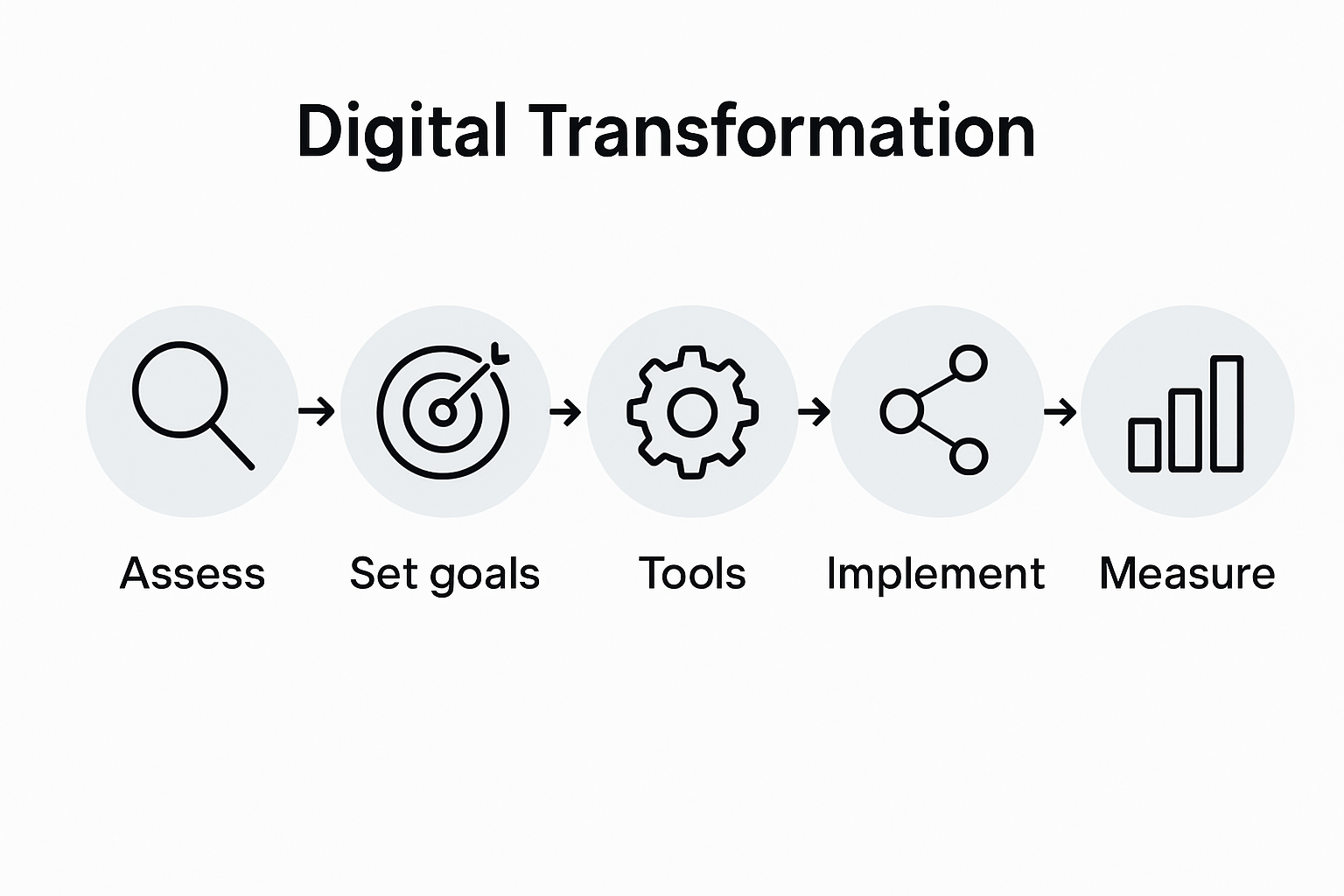
- Step 1: Assess Current Workflows And Identify Bottlenecks
- Step 2: Set Digital Transformation Goals And Align Stakeholders
- Step 3: Select Suitable Automation Tools And Platforms
- Step 4: Implement Solutions And Integrate Systems
- Step 5: Test Processes And Measure Improvements
Quick Overview
| Essential Insight | Detailed Explanation |
|---|---|
| 1. Identify workflow bottlenecks | Map existing processes to find inefficiencies that hinder operations. Focus on tasks with long completion times and complex communications. |
| 2. Set clear digital transformation goals | Create measurable, specific, and time-bound objectives that stakeholders across departments can support and understand. |
| 3. Select appropriate automation tools | Evaluate tools based on scalability and integration capabilities, ensuring they align with your current workflows and future needs. |
| 4. Implement solutions methodically | Use low-code platforms for rapid deployment and focus on system integrations to enhance data flow across your organisation. |
| 5. Test and continuously measure improvements | Establish baseline metrics for validation post-implementation, using KPIs to track operational efficiency and overall impact. |
Step 1: Assess current workflows and identify bottlenecks
Identifying workflow bottlenecks is crucial for successful digital transformation. In this step, you will systematically map out your existing processes to pinpoint inefficiencies that slow down your business operations.
To begin, document each workflow across your organisation by creating a comprehensive process map. Start by listing all core business activities from client onboarding to service delivery. Pay close attention to repetitive tasks, manual data entry points, and areas where communication or handoffs between teams become complex. Process mining techniques can help you analyse these workflows with precision, revealing hidden inefficiencies that might not be immediately apparent.
Look for specific indicators of bottlenecks such as tasks with extended completion times, frequent delays, redundant steps, or processes requiring multiple manual interventions. Movement analytics methods can be particularly useful in detecting operational constraints by tracking how work moves through different stages of your business. For instance, if client onboarding consistently takes longer than expected or client communication involves multiple back-and-forth exchanges, these are strong signals of potential workflow problems.
A practical tip: Don’t just rely on your perception. Involve team members who execute these processes daily. Their frontline insights will provide nuanced understanding of workflow challenges that might not be visible from a management perspective. By combining data-driven analysis with team feedback, you’ll create a robust assessment of your current operational landscape.
Once you have mapped and analysed your workflows, you will be ready to move to the next critical phase of digital transformation: designing streamlined, efficient processes that leverage technological solutions.
Step 2: Set digital transformation goals and align stakeholders
Successful digital transformation requires clear strategic objectives and unified commitment from all organisational stakeholders. This crucial step involves establishing measurable goals and creating a shared vision that resonates across different departments and levels of your business.

Begin by conducting a comprehensive internal assessment to identify strategic alignment mechanisms that will help different stakeholder groups understand and support your digital transformation initiatives. Develop a goal framework that translates high-level strategic objectives into concrete, actionable targets. The GQM+Strategies method provides an excellent approach for creating meaningful connections between organisational goals and specific transformation strategies.
When setting goals, ensure they are specific, measurable, achievable, relevant, and time-bound (SMART). Involve representatives from various departments to gather diverse perspectives and build collective ownership. This collaborative approach helps create a shared understanding of the transformation’s purpose and potential impact. Consider hosting workshops or collaborative sessions where stakeholders can contribute insights, voice concerns, and actively participate in goal setting.
A practical tip: Create a visual roadmap that illustrates how digital transformation goals connect to broader business objectives. This transparency helps stakeholders see their role in the transformation journey and maintains motivation throughout the implementation process.
With aligned goals and stakeholder support, you are now prepared to move forward with designing a detailed implementation strategy that will bring your digital transformation vision to life.
Step 3: Select suitable automation tools and platforms
Selecting the right automation tools and platforms is a critical decision that will shape your digital transformation journey. This step requires careful evaluation of your organisational needs, technological capabilities, and long-term strategic objectives.
Business architecture practices emphasise the importance of choosing tools that not only address immediate operational challenges but also align with your broader digital transformation strategy. Start by conducting a comprehensive audit of your current workflows and identifying specific areas that require automation. Value-stream mapping provides an excellent methodology for analysing your existing processes and pinpointing opportunities for technological intervention.
When evaluating potential automation tools, consider several key factors: scalability, integration capabilities, user-friendliness, cost-effectiveness, and alignment with your existing technological infrastructure. Look for platforms that offer flexible solutions and can adapt to your organisation’s unique requirements. Prioritise tools that provide robust analytics, seamless communication between different systems, and the ability to customise workflows to match your specific business processes.
A practical tip: Do not rush the selection process. Request trial periods or demo versions of potential platforms, and involve key team members from different departments in the evaluation. Their diverse perspectives will help ensure you choose a solution that meets varied organisational needs and gains widespread adoption.
With carefully selected automation tools in place, you are now prepared to develop a comprehensive implementation strategy that will transform your business processes and drive operational efficiency.
Step 4: Implement solutions and integrate systems
Successful digital transformation requires a strategic and methodical approach to implementing new technological solutions and creating seamless system integrations across your organisation. This critical stage transforms your carefully planned strategies into tangible operational improvements.
Begin by leveraging flexible low-code digital platforms that enable rapid deployment and customisation of technological solutions. These platforms allow you to implement process improvement interventions with greater agility and minimal disruption to existing workflows. When integrating systems, focus on creating interconnected ecosystems that facilitate smooth data exchange and communication between different technological components.
To ensure comprehensive and inclusive implementation, adopt the SCOR framework which emphasises structured co-design and stakeholder engagement protocols. This approach embeds accountability and ensures that all key organisational members understand and support the technological transformation. Prioritise solutions that offer robust API capabilities, allowing seamless data synchronisation and real-time information sharing across different platforms and departments.
A practical tip: Implement your new systems incrementally and maintain parallel running of old and new systems during the transition. This approach minimises operational risks and provides your team with adequate time to adapt to new technological environments. Conduct regular training sessions and provide comprehensive documentation to support smooth user adoption.
With your systems integrated and solutions implemented, you are now prepared to monitor performance, gather feedback, and continuously refine your digital transformation strategy.
Step 5: Test processes and measure improvements
Testing and measuring improvements are essential steps in validating the effectiveness of your digital transformation strategy. This phase allows you to objectively assess the impact of your technological interventions and identify areas for further refinement.
Pre-intervention and post-intervention analyses provide a comprehensive approach to understanding your process improvements. Begin by establishing clear baseline metrics before implementing new systems, then systematically compare performance indicators to quantify the actual benefits. Look for tangible improvements in areas such as operational efficiency, cost reduction, customer satisfaction, and employee productivity.
Utilise the GQM+Strategies methodology to consistently align goals and strategies across different organisational units. This approach enables measurement-based decision-making by creating a structured framework for tracking goal attainment. Design specific, measurable key performance indicators (KPIs) that directly reflect your digital transformation objectives. These might include metrics like process completion time, error reduction rates, automation efficiency, or customer engagement levels.
A practical tip: Implement a continuous feedback loop that involves stakeholders from various departments. Regularly collect qualitative and quantitative data to understand not just the numerical improvements, but also the practical impact on day-to-day operations. This holistic approach ensures that your digital transformation delivers meaningful value beyond statistical metrics.
With a clear understanding of your improvements, you are now prepared to refine and scale your digital transformation strategy, creating a more agile and responsive organisational ecosystem.
Unlock Seamless Digital Transformation for Your Business
The article highlights the challenges many organisations face when trying to identify workflow bottlenecks and align stakeholders around clear digital transformation goals. You may recognise the frustrations of manual, repetitive tasks slowing down client onboarding or the difficulty of selecting automation tools that truly fit your unique needs. These obstacles often stand in the way of transforming everyday operations into streamlined, intelligent systems.
Fame Razak specialises in helping small businesses and agencies overcome these exact pain points. As a Fractional CTO with a strong agency background, Fame Razak guides you through automating processes like scheduling and workflow orchestration while integrating AI receptionists for enhanced efficiency. By connecting strategic goals to practical automation solutions, you can finally focus on the meaningful work that moves your business forward.
Take the next step towards a scalable, efficient operation today. Discover how to design and implement your digital transformation journey effectively with expert support at Fame Razak. Explore the range of solutions tailored to your needs and start overcoming workflow frustrations right now by visiting Fame Razak’s homepage. Ready to transform your business processes and empower your team Join us at Fame Razak and bring your digital transformation strategy to life.
Frequently Asked Questions
What are the first steps in digital transformation?
To start your digital transformation, assess your current workflows to identify bottlenecks. Document your existing processes and involve team members to gain insights into inefficiencies.
How can I set effective digital transformation goals?
Establish clear, measurable goals that align with your organisational objectives. Involve stakeholders from various departments in the goal-setting process to ensure a shared vision and collective ownership.
What factors should I consider when selecting automation tools?
When choosing automation tools, evaluate their scalability, integration capabilities, user-friendliness, and cost-effectiveness. Prioritise solutions that fit your existing technological infrastructure and can adapt to your specific business needs.
How do I integrate new systems during digital transformation?
Implement new systems incrementally to minimise disruptions. Maintain parallel running of old and new systems during the transition to ensure a smooth adaptation for your team.
What methods can I use to measure improvements after implementation?
Utilise pre-intervention and post-intervention analyses to assess changes in performance metrics. Establish key performance indicators (KPIs) related to your digital transformation objectives and regularly collect feedback from stakeholders to understand the impact on operations.
Recommended
- How to Lead Digital Transformation for Scalable Success – Fame Razak
- Digital Transformation Checklist for Small Businesses Success – Fame Razak
- Complete Guide to Digital Transformation in Business – Fame Razak
- What Is Digital First? Complete Guide for Businesses – Fame Razak
- Tech for Small Businesses: Complete Guide for 2025 – Projector Display
- Insurance Digital Transformation Guide for Effective Change – Digital Insurance Platform | IBSuite Insurance Software | Modern Insurance System