
Over 60 percent of small british businesses consider digital transformation essential for long-term growth. As digital disruption rapidly reshapes every industry, keeping pace is no longer optional for small organisations looking to thrive. Understanding how technology fundamentally changes operations, customer experiences, and business models allows british companies to compete more effectively and adapt quickly in a demanding market.
Table of Contents
- Defining Digital Transformation in Business
- Types of Digital Transformation Initiatives
- How Digital Change Powers Small Businesses
- Risks, Costs And Common Misconceptions
- Practical Steps To Ensure Success
Key Takeaways
| Point | Details |
|---|---|
| Holistic Approach to Transformation | Digital Transformation requires a comprehensive strategy that integrates technology, culture, and operations to drive sustainable change. |
| Continuous Learning and Adaptation | Organisations must foster an environment of continuous improvement and upskilling to remain competitive in a digital landscape. |
| Strategic Planning is Crucial | Thorough planning and alignment are essential to mitigate risks and ensure successful digital initiatives. |
| Technology Alone is Insufficient | Successful transformation is not just about technology; it necessitates cultural shifts and ongoing organisational commitment. |
Defining Digital Transformation in Business
Digital Transformation represents a fundamental reimagining of how organisations leverage digital technologies to fundamentally redesign business processes, operational models, and customer experiences. It goes beyond merely implementing new technologies and instead focuses on creating holistic, strategic shifts that enable businesses to become more agile, efficient, and responsive.
At its core, digital transformation involves integrating digital technologies to fundamentally change business operations, reshaping how organisations deliver value to customers and compete in increasingly digital marketplaces. This process is not simply about adopting new tools, but about creating comprehensive changes that touch every aspect of a business – from internal workflows and communication strategies to customer engagement and service delivery.
Small service businesses can conceptualise digital transformation through several key dimensions. These typically include technological integration, cultural adaptation, and strategic reimagining. Operational procedures and customer experience modernisation become critical, with businesses needing to assess how digital technologies can streamline processes, enhance communication, and create more personalised, responsive service models. This might involve implementing cloud-based management systems, adopting customer relationship management platforms, utilising data analytics for strategic decision-making, or creating digital channels for client interaction.
The following table compares key dimensions of digital transformation in small service businesses:
| Dimension | Description | Example Applications |
|---|---|---|
| Technological Integration | Implementation of digital systems and tools | Cloud software, CRM platforms |
| Cultural Adaptation | Shifting organisational mindset and behaviours | Staff digital skills training |
| Strategic Reimagining | Redesigning business models and processes | Creating online service offerings |
| Operational Modernisation | Improving workflows with digital solutions | Automated appointment scheduling |
Pro Tip: Digital Transformation Starting Point: Begin by conducting a comprehensive audit of your current business processes, identifying specific pain points where digital technologies could introduce immediate efficiency gains and improved customer experiences.
Types of Digital Transformation Initiatives
Digital Transformation Initiatives represent strategic approaches through which businesses systematically integrate digital technologies to enhance operational capabilities, drive innovation, and create sustainable competitive advantages. These initiatives are not uniform across organisations but are tailored to specific business needs, technological readiness, and strategic objectives.
Small service businesses typically engage in multiple digital transformation initiatives focusing on developing digital capabilities and creating value-driven business models. These initiatives can be categorised into several key areas: technological infrastructure, operational processes, customer experience, workforce capabilities, and strategic business model redesign. Technological infrastructure might involve cloud migration, cybersecurity enhancements, and implementing robust digital platforms that enable seamless communication and data management.
The research highlights that effective digital transformation requires more than technological implementation. Leadership plays a critical role in fostering organisational agility and enabling knowledge transfer, which means successful initiatives demand strategic alignment, cultural adaptation, and continuous learning. For small service businesses, this could involve upskilling staff, creating cross-functional digital teams, developing data literacy, and establishing innovation-friendly environments that encourage experimentation and continuous improvement.
Pro Tip: Strategic Digital Initiative Assessment: Regularly evaluate your digital transformation initiatives against clear, measurable outcomes, ensuring each technological investment directly contributes to improved efficiency, customer satisfaction, or revenue generation.
How Digital Change Powers Small Businesses
Digital Change represents a transformative force that enables small businesses to transcend traditional operational limitations, creating unprecedented opportunities for growth, efficiency, and competitive advantage. By strategically integrating digital technologies, small service businesses can fundamentally reimagine their approach to delivering value, managing resources, and engaging with customers.

Digital technologies and capabilities play a critical role in enabling small and medium enterprises to create sustainable value and maintain competitive positioning. This transformation goes beyond mere technological adoption, encompassing a holistic approach that reshapes business models, operational processes, and organisational culture. Small businesses can leverage digital tools to streamline workflows, automate repetitive tasks, enhance decision-making through data analytics, and create more personalised customer experiences.
Organisational resilience emerges as a significant benefit of digital transformation, with small businesses developing improved adaptability and innovation capabilities. This resilience manifests through enhanced learning mechanisms, more agile response to market changes, and the ability to quickly pivot strategies in response to emerging challenges. Digital technologies provide small businesses with scalable solutions that were previously accessible only to larger enterprises, effectively democratising advanced business capabilities.
Pro Tip: Incremental Digital Adoption: Start by identifying one specific business process that could benefit from digital transformation, and implement targeted technological solutions that deliver immediate, measurable improvements.
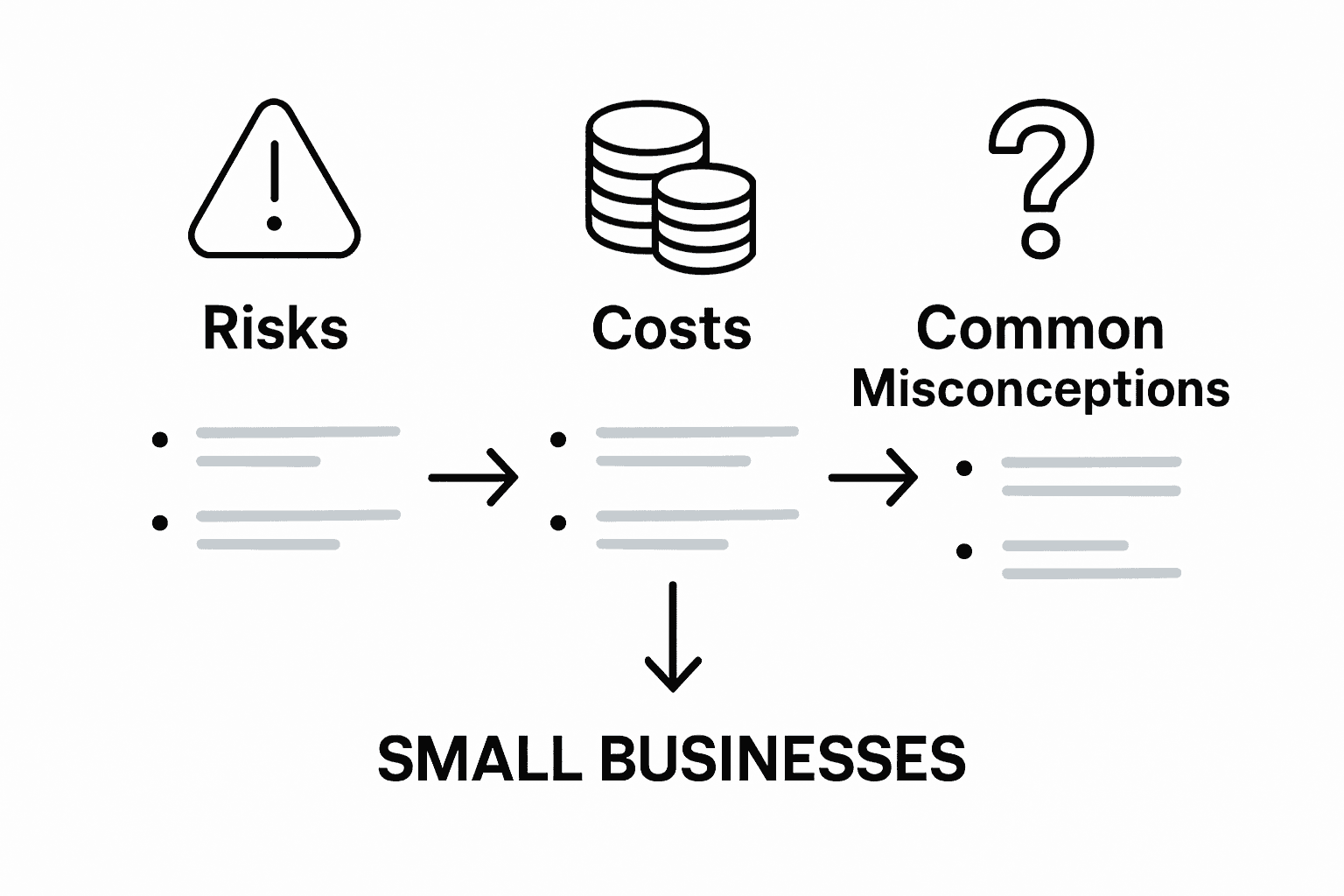
Risks, Costs and Common Misconceptions
Digital Transformation involves significant strategic investments that require careful navigation of potential risks, financial considerations, and widespread misunderstandings about technological implementation. Small businesses must approach these initiatives with a nuanced understanding of potential challenges and realistic expectations about technological integration.
High failure rates in digital transformation initiatives underscore the critical importance of developing robust business architecture practices. These failures often stem from inadequate planning, unrealistic expectations, and a lack of comprehensive strategic alignment. Common financial risks include unexpected implementation costs, potential disruptions to existing workflows, and the need for ongoing staff training and technological upgrades. Small service businesses must budget not just for initial technological investments, but for continuous adaptation and skill development.
Misconceptions in digital transformation literature frequently arise from loosely defined constructs and absent overarching frameworks, which can lead organisations to misunderstand the fundamental nature of technological change. Many small businesses mistakenly view digital transformation as a one-time technological implementation, rather than an ongoing process of organisational learning and adaptation. Other prevalent misconceptions include believing that technology alone can solve complex business challenges, underestimating the cultural shifts required, and assuming digital transformation is only relevant for large corporate entities.
Here is a summary of top risks, costs, and misconceptions related to digital transformation:
| Category | Key Consideration | Example Impact |
|---|---|---|
| Strategic Risks | Poor planning and alignment | Ineffective projects, wasted investment |
| Financial Costs | Ongoing upgrades and training required | Rising operational expenses |
| Common Misconceptions | Belief technology alone is sufficient | Lack of cultural change, limited results |
| Organisational Challenges | Underestimating adaptation needs | Staff resistance, slow adoption |
Pro Tip: Risk Mitigation Strategy: Conduct a comprehensive internal audit before digital transformation, identifying specific organisational capabilities, potential skill gaps, and realistic technological requirements to develop a targeted, phased implementation approach.
Practical Steps to Ensure Success
Digital Transformation requires a strategic, systematic approach that goes beyond mere technological implementation. Small service businesses must develop a comprehensive roadmap that addresses technological, operational, and cultural dimensions of organisational change, ensuring a holistic and sustainable transformation strategy.
A holistic digital maturity model provides organisations with a structured approach to assess and implement effective digital transformation strategies. This involves conducting a thorough audit of existing technological capabilities, identifying skill gaps, and creating a phased implementation plan. Key steps include mapping current business processes, evaluating technological infrastructure, understanding customer interaction points, and developing clear metrics for measuring transformation success. Small businesses should prioritise initiatives that offer immediate operational improvements while simultaneously building long-term digital capabilities.
Integrating data analytics and disciplined operational frameworks is crucial for successful digital transformation. This approach demands creating cross-functional teams that can bridge technological implementation with strategic business objectives. Small service businesses should focus on developing data literacy across the organisation, implementing robust data governance practices, and creating flexible technological ecosystems that can adapt to evolving business requirements. Successful transformation requires continuous learning, iterative implementation, and a willingness to experiment and recalibrate strategies based on real-world performance.
Pro Tip: Transformation Readiness Assessment: Conduct a comprehensive internal capability audit, mapping your current technological infrastructure, skill sets, and strategic objectives to create a targeted, phased digital transformation roadmap.
Unlock the Full Potential of Your Small Service Business with Intelligent Automation
The article highlights critical challenges in digital transformation such as operational modernisation, cultural adaptation, and strategic reimagining. Small service businesses often struggle with inefficient workflows, staff resistance to change, and the complexity of integrating new technologies into everyday operations. These pain points can stall growth and limit the ability to deliver personalised customer experiences. If you find yourself navigating these exact hurdles, you are not alone.
At Fame Razak, we specialise in helping small businesses overcome these obstacles by automating the work that slows you down. From client onboarding and seamless scheduling to intelligent AI receptionists and workflow orchestration, our tailored solutions create scalable, efficient systems designed to support your digital transformation journey. Don’t wait for digital change to happen by chance. Start turning your operations into intelligent processes today and experience the benefits of increased agility and resilience. Discover how to accelerate your transformation by visiting Fame Razak and explore practical ways to transform your business.
Frequently Asked Questions
What is digital transformation in small service businesses?
Digital transformation in small service businesses refers to the comprehensive integration of digital technologies that fundamentally changes how these businesses operate, deliver value to customers, and compete in the marketplace. It encompasses improvements in processes, customer experiences, and operational strategies.
What are the key dimensions of digital transformation?
The key dimensions of digital transformation include technological integration, cultural adaptation, strategic reimagining, and operational modernisation. These elements work together to enhance internal workflows, communication, and customer engagement through digital technologies.
What risks should small service businesses consider during digital transformation?
Small service businesses should be aware of risks such as poor planning and alignment, unexpected costs, ongoing training requirements, and common misconceptions about the nature of digital transformation. These can lead to ineffective projects and wasted investments if not managed properly.
How can small service businesses ensure a successful digital transformation?
To ensure success in digital transformation, small service businesses should conduct a comprehensive audit of their current processes, identify technology and skill gaps, create a phased implementation plan, and focus on continuous learning and adaptation throughout the transformation process.