
Nearly every british company now faces growing pressure to adapt, yet up to 95 percent of digital transformation efforts fall short of expectations. As technology evolves at a rapid pace, the way organisations operate, serve customers, and compete is being transformed on a global scale. This guide outlines how digital transformation truly works for businesses, offering clear explanations and practical steps to help you build lasting change and stay ahead in the modern market.
Table of Contents
- Defining Digital Transformation For Businesses
- Types Of Digital Transformation Initiatives
- How Automation And AI Enable Transformation
- Practical Steps To Digitally Transform Operations
- Risks, Barriers, And Common Mistakes To Avoid
Key Takeaways
| Point | Details |
|---|---|
| Holistic Approach to Digital Transformation | Digital transformation involves rethinking business models and processes, not just adopting new technologies. A strategic, organisational commitment is essential for long-term success. |
| Cultural and Technological Integration | Successful transformation requires a blend of technological investment and a cultural shift that empowers employees to embrace innovation and continuous learning. |
| Comprehensive Strategy Development | Organisations should establish clear objectives and robust change management protocols to ensure alignment and effective implementation of digital initiatives. |
| Awareness of Risks and Barriers | Understanding common pitfalls, such as inadequate strategic alignment and insufficient training, is crucial for mitigating risks and enhancing the likelihood of successful outcomes. |
Defining Digital Transformation for Businesses
Digital transformation represents a profound reimagining of how businesses leverage technology to fundamentally redesign their operational capabilities. At its core, it goes far beyond merely implementing new software or digital tools. Instead, digital transformation involves a strategic, holistic approach to fundamentally changing business models and processes through emerging digital technologies.
This strategic shift encompasses several critical dimensions. Businesses are not just updating technology, but completely rethinking how they create value, engage customers, and optimise internal workflows. Key transformation elements include:
- Adopting data-driven decision-making processes
- Automating repetitive operational tasks
- Enhancing customer interaction through digital platforms
- Redesigning organisational structures to support technological innovation
Moreover, digital transformation is not a one-time project but a continuous journey of adaptation. Digital technology enables companies to modernise corporate processes and improve productivity, creating more responsive and agile business environments. By integrating advanced digital platforms, organisations can unlock new levels of efficiency, creativity, and competitive advantage.
Successful digital transformation requires more than technological investment. It demands a cultural shift where leadership embraces technological change, employees develop new digital skills, and the entire organisation becomes committed to ongoing innovation and learning. This holistic approach ensures that digital transformation becomes a sustainable strategy for long-term business growth and resilience.
Types of Digital Transformation Initiatives
Digital transformation initiatives represent strategic approaches organisations employ to fundamentally reimagine their technological capabilities and business models. These initiatives can be comprehensively categorised across measurements, impact factors, and economic consequences, demonstrating the multifaceted nature of technological evolution in modern enterprises.
Across different industries, digital transformation takes unique forms tailored to specific sector requirements. Key transformation initiatives include:
- Healthcare: Implementing telemedicine platforms
- Banking: Digitising services through mobile applications
- Education: Creating virtual learning environments
- Manufacturing: Introducing Internet of Things (IoT) monitoring systems
- Retail: Developing omnichannel customer engagement platforms
Digital transformation initiatives leverage technology to drive innovation across various operational domains, enabling organisations to enhance customer experiences and operational efficiency. These strategic interventions go beyond simple technological upgrades, representing fundamental shifts in how businesses conceptualise and deliver value.

Successful digital transformation requires a holistic approach that integrates technological innovation with organisational culture. This means not just implementing new tools, but creating adaptive ecosystems where technological capabilities continuously evolve. By embracing flexible, forward-thinking strategies, businesses can transform potential technological disruptions into sustainable competitive advantages.
How Automation and AI Enable Transformation
Automation and artificial intelligence represent transformative technologies that fundamentally reshape how organisations operate and deliver value. Data Operations (DataOps) provide organisations with integrated approaches to leverage analytics and drive digital business transformation, enabling unprecedented levels of operational efficiency and strategic innovation.
The core mechanisms of automation and AI driving transformation include:
- Intelligent process automation
- Predictive analytics and decision support
- Real-time data processing and insights generation
- Personalised customer experience design
- Adaptive workflow optimisation
These technological capabilities go beyond simple task replacement. They represent sophisticated systems that can learn, adapt, and continuously improve organisational performance. Machine learning algorithms can analyse complex datasets, identifying patterns and opportunities that human analysts might overlook, while robotic process automation eliminates repetitive manual tasks, freeing human talent for more strategic and creative endeavours.
Successful implementation requires a holistic approach that balances technological capability with human expertise. Organisations must develop robust data governance frameworks, invest in employee skill development, and create cultural environments that embrace technological change. By viewing automation and AI as collaborative tools rather than replacement technologies, businesses can unlock transformative potential that drives innovation, enhances productivity, and creates sustainable competitive advantages.
Practical Steps to Digitally Transform Operations
Implementing digital transformation requires a systematic approach that aligns technological capabilities with strategic business objectives. Organisations must develop a comprehensive strategy that goes beyond mere technological implementation, focusing instead on creating holistic, adaptive digital ecosystems.
The core practical steps for digital transformation include:
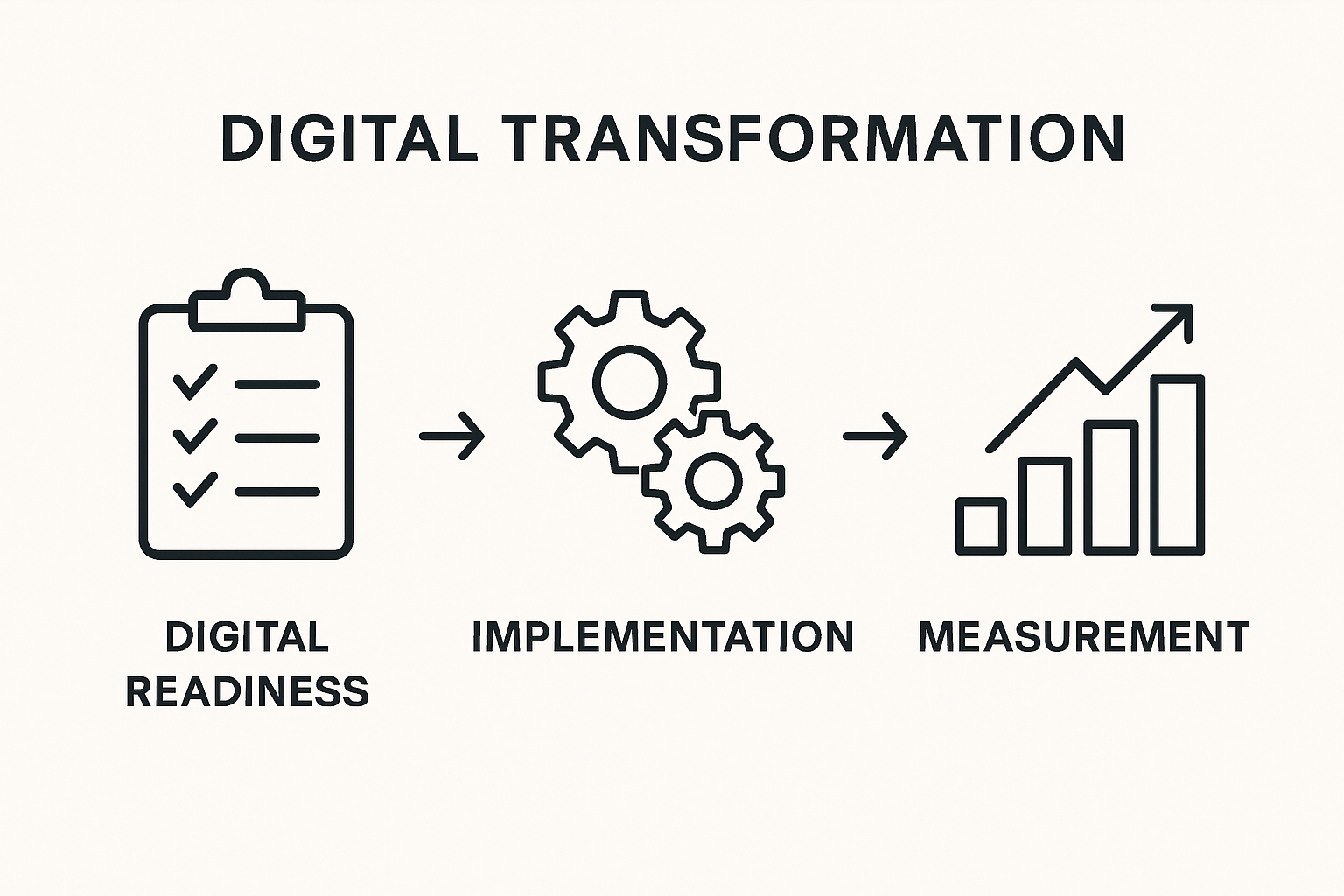
- Conduct a comprehensive digital readiness assessment
- Define clear digital transformation objectives
- Identify specific technological interventions
- Build cross-functional digital capability teams
- Develop robust change management protocols
- Establish continuous learning and adaptation mechanisms
- Create metrics for measuring digital transformation progress
Successful transformation demands more than technological investment. Leaders must cultivate a culture of innovation that empowers employees to experiment, learn, and adapt. This involves breaking down traditional organisational silos, encouraging digital literacy, and creating environments that support continuous technological exploration.
Measurement and accountability are crucial. Organisations should establish clear key performance indicators that track not just technological implementation, but broader impacts on operational efficiency, customer experience, and strategic agility. By treating digital transformation as an ongoing journey of organisational learning and adaptation, businesses can create sustainable competitive advantages in an increasingly digital marketplace.
Risks, Barriers, and Common Mistakes to Avoid
Despite the critical importance of digital transformation, up to 95% of initiatives fail to deliver expected business benefits, highlighting the significant challenges organisations face when attempting technological evolution. Understanding these potential pitfalls is crucial for developing robust, sustainable digital transformation strategies.
Common risks and barriers include:
- Inadequate strategic alignment
- Resistance to organisational change
- Insufficient technological infrastructure
- Lack of digital skills and capabilities
- Poor change management processes
- Insufficient investment in employee training
- Unclear transformation objectives
Digital transformation influences organisational resilience through strategic learning and innovation approaches, but requires careful management of complex technological and human factors. The most critical mistakes organisations make involve treating digital transformation as a purely technological upgrade, rather than a holistic business reimagination.
Successful digital transformation demands a comprehensive approach that balances technological investment with cultural adaptation. Leaders must create environments that encourage continuous learning, experiment with new technologies, and develop flexible strategies that can pivot rapidly in response to emerging challenges. By recognising digital transformation as an ongoing journey of organisational adaptation, businesses can mitigate risks and create sustainable competitive advantages.
Transform Your Business Operations into Intelligent Workflows Today
The challenge of digital transformation often lies in turning complex processes into seamless, intelligent workflows that truly empower your team. From automating repetitive tasks to enhancing data-driven decision-making and overcoming resistance to change, these are critical hurdles that many businesses face. If you are ready to move beyond simple technological upgrades towards creating scalable, adaptive systems that boost productivity and customer engagement, then a strategic, holistic approach is essential.
At Fame Razak, we specialise in helping small businesses and agencies overcome these exact challenges by automating the work that slows them down. Whether it’s streamlining client onboarding, implementing AI receptionists, or orchestrating workflows with precision, our Fractional CTO expertise rooted in agency experience delivers practical, scalable solutions. Do not wait to embrace the continuous journey of digital transformation. Explore how to turn your operations into intelligent systems designed for long-term growth by visiting Fame Razak. Take action now and start focusing your efforts on meaningful work that truly drives your business forward.
Frequently Asked Questions
What is digital transformation in business?
Digital transformation in business refers to the comprehensive strategy of leveraging technology to fundamentally change business models and processes. It involves not just adopting new tools, but rethinking how value is created, workflows are optimised, and customer engagement is enhanced.
How can automation improve operational workflows?
Automation improves operational workflows by streamlining repetitive tasks, increasing efficiency, and allowing employees to focus on more strategic activities. By implementing systems like robotic process automation, businesses can enhance productivity and reduce human error.
What are the key steps for implementing digital transformation?
Key steps for implementing digital transformation include conducting a digital readiness assessment, defining clear objectives, identifying technology interventions, building cross-functional teams, and establishing change management protocols. Continuous learning and adaptation are also crucial for success.
What are common challenges faced during digital transformation?
Common challenges during digital transformation include inadequate strategic alignment, resistance to change, lack of digital skills, and insufficient infrastructure. Addressing these issues through strong leadership and a supportive culture is vital for successful transformation.
Recommended
- 7 Steps to Master Digitization, Digitalization and Digital Transformation – Fame Razak
- Business Process Digital Transformation – Boosting Real-World Efficiency – Fame Razak
- Digital Transformation Step by Step: A Practical Guide – Fame Razak
- Complete Guide to Digital Transformation in Business – Fame Razak
- Future of Diesel Engines in 2025: What Technicians Need to Know – My WordPress