
Digital Technology in Business: Driving Efficiency and Growth
Over 60 percent of British small businesses now consider digital technology vital for daily operations. For owners and founders in London, making sense of rapid digital advancements is more than just a tech trend, it is a direct pathway to stronger client relationships and smarter decisions. This guide breaks down what digital technology truly means for business, highlighting practical steps to harness automation for lasting efficiency and competitive impact.
Table of Contents
- What Digital Technology Means For Business
- Core Types And Key Distinctions
- How Digital Systems Transform Operations
- Real-World Automation And AI Examples
- Security, Costs And Common Mistakes
Key Takeaways
| Point | Details |
|---|---|
| Embrace Digital Transformation | Organisations must adopt digital transformation strategies to enhance competitiveness and foster growth in today’s economy. |
| Leverage AI and Automation | Automating repetitive tasks with AI tools can significantly improve operational efficiency and enable staff to focus on strategic activities. |
| Prioritise Cybersecurity | Implementing robust security measures and regular audits is crucial to protect digital assets and minimise vulnerabilities during transformation. |
| Align Technology with Business Goals | Ensure that technology investments are aligned with operational needs to achieve measurable returns and avoid unnecessary expenses. |
What Digital Technology Means for Business
Digital technology is fundamentally reshaping how businesses operate, compete, and create value in the modern economy. Digital transformation strategies now represent critical pathways for organisations seeking sustained growth and competitive advantage.
At its core, digital technology encompasses tools, platforms, and systems that enable businesses to streamline operations, enhance communication, and unlock new opportunities for innovation. From cloud computing and artificial intelligence to data analytics and collaborative software, these technologies provide powerful mechanisms for increasing efficiency and driving strategic decision making. The World Bank highlights that digital adoption rates are rapidly accelerating across industries, fundamentally restructuring traditional business models and creating unprecedented opportunities for agile organisations.
Businesses leveraging digital technologies can achieve remarkable improvements in productivity and customer engagement. Digital platforms and data-driven services enable companies to gather sophisticated insights, personalise customer experiences, and respond dynamically to market changes. Small service businesses, in particular, can use digital tools to automate administrative tasks, expand their reach, and compete more effectively against larger competitors.
Practical Insight: Start by conducting a comprehensive digital audit of your current business processes to identify specific areas where technology can drive meaningful efficiency gains.
Core Types and Key Distinctions
Digital technologies are not monolithic but rather a complex ecosystem of interconnected systems and tools designed to transform business operations. Digital infrastructure and technological frameworks can be strategically categorised into foundational and advanced technological layers that serve different organisational needs.
The core types of digital technology encompass several critical domains. Connectivity and network technologies form the foundational infrastructure, enabling seamless communication and data exchange. Data analytics and artificial intelligence represent the advanced layer, providing sophisticated insights and intelligent automation capabilities. Other key technological categories include cloud computing platforms, collaborative software systems, cybersecurity solutions, and digital communication tools. Each technological category serves distinct purposes ranging from operational efficiency to strategic decision making.
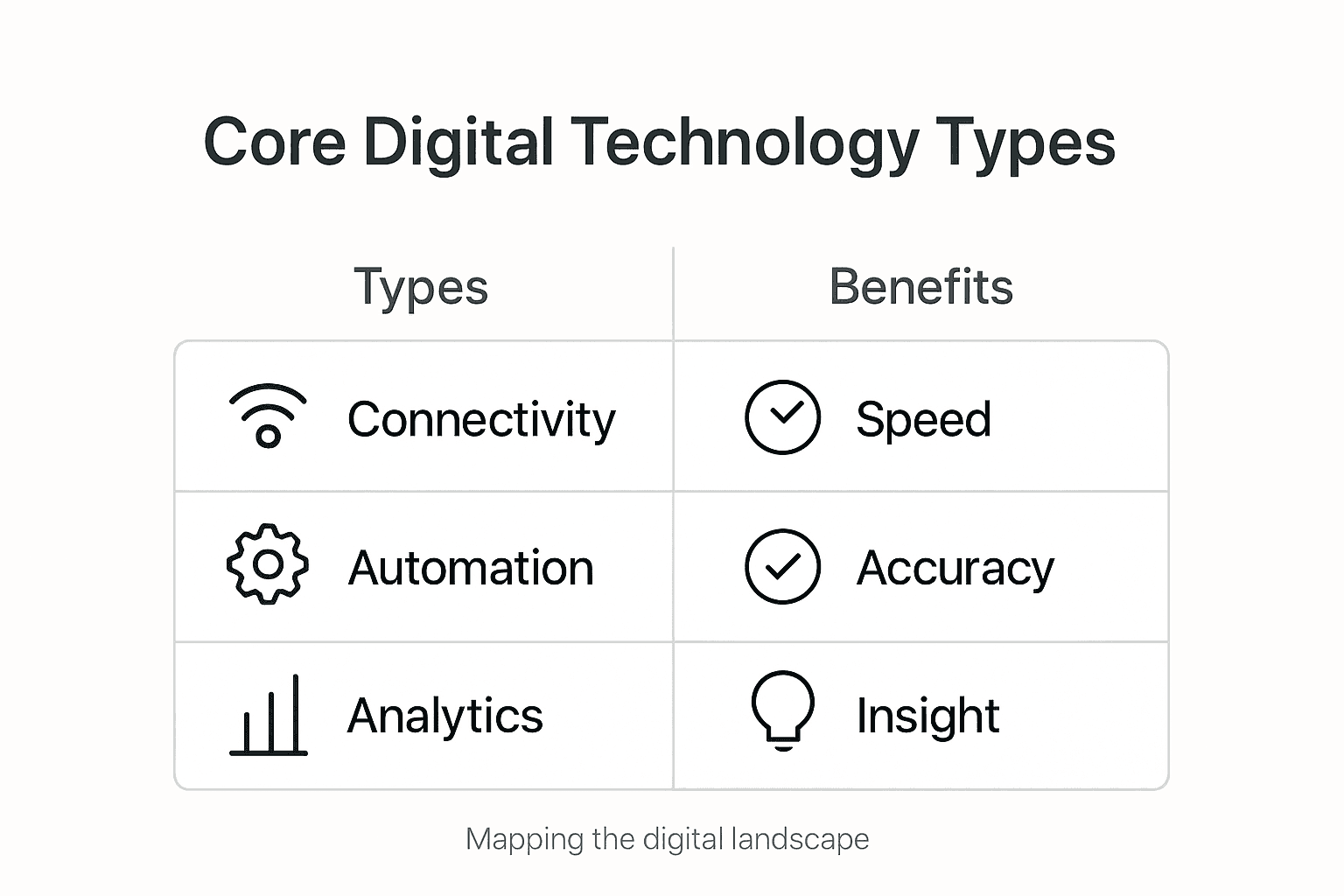
Businesses must understand the nuanced distinctions between these technological types to implement effective digital strategies. While foundational technologies like network infrastructure provide essential connectivity, advanced technologies such as machine learning and predictive analytics offer transformative capabilities. Small service businesses can strategically combine these technologies to create integrated digital ecosystems that enhance productivity, customer engagement, and competitive positioning.
Practical Insight: Map your business processes against different digital technology types to identify precise opportunities for technological integration and performance improvement.
Below is a summary of key digital technology types and their primary business benefits:
| Technology Type | Example Applications | Main Benefit |
|---|---|---|
| Network Infrastructure | Wi-Fi, Fibre Connectivity | Seamless information flow |
| Cloud Computing | File Storage, Hosting | Scalable resource access |
| Artificial Intelligence | Chatbots, Predictive Tools | Intelligent automation |
| Data Analytics | Customer Trends, Reporting | Informed decision making |
| Collaborative Software | Project Management, IM | Enhanced team productivity |
| Cybersecurity Solutions | Firewalls, Encryption | Protected digital assets |
| Digital Communication | Video Conferencing, Email | Faster client interaction |
How Digital Systems Transform Operations
Digital systems are revolutionising business operations by creating intelligent, interconnected workflows that dramatically enhance organisational performance. Integrated information systems enable businesses to streamline processes, automate repetitive tasks, and generate real-time insights that drive strategic decision making.

The transformation occurs through multiple sophisticated digital systems that address different operational needs. Enterprise Resource Planning (ERP) systems centralise data management, allowing seamless coordination across departments. Customer Relationship Management (CRM) platforms optimise client interactions, while supply chain management technologies provide unprecedented visibility into logistics and inventory processes. These systems work collectively to break down traditional organisational silos, creating more agile and responsive business environments.
Advanced information technologies fundamentally reshape how organisations allocate resources, make decisions, and respond to market dynamics. By leveraging data analytics, machine learning, and automated workflows, businesses can transition from reactive to predictive operational models. Small service businesses particularly benefit from these technologies, gaining capabilities previously reserved for large corporations through scalable, cloud-based solutions that level the competitive landscape.
Practical Insight: Conduct a comprehensive audit of your current operational processes to identify specific areas where digital systems can eliminate inefficiencies and create measurable productivity gains.
Real-World Automation and AI Examples
Automation and artificial intelligence are transforming business operations across diverse sectors, offering practical solutions that dramatically improve efficiency and performance. Conversational AI technologies have already demonstrated remarkable potential, with studies showing significant productivity gains in customer service departments and streamlined employee onboarding processes.
Small businesses can leverage AI and automation in multiple strategic ways. Chatbots provide 24/7 customer support, handling routine enquiries and freeing human teams to focus on complex interactions. Automated scheduling systems eliminate administrative bottlenecks, while machine learning algorithms can analyse customer data to personalise marketing campaigns and predict purchasing behaviours. Workflow automation tools can integrate multiple business processes, reducing manual data entry and minimising human error.
The practical applications of AI extend beyond customer-facing interactions. Intelligent inventory management systems can predict stock requirements, optimise supply chains, and reduce waste. Financial services can utilise AI for fraud detection, while human resources departments can streamline recruitment processes through automated candidate screening. These technologies are not about replacing human workers, but augmenting their capabilities, allowing professionals to concentrate on strategic, creative, and high-value tasks that require nuanced human judgment.
Practical Insight: Start by identifying repetitive, time-consuming tasks in your business and research specific AI or automation tools designed to address those precise operational challenges.
Security, Costs and Common Mistakes
Digital technology implementation comes with complex challenges that can derail business transformation efforts if not carefully managed. Emerging technology risks often stem from strategic oversights, inadequate planning, and insufficient understanding of technological integration requirements.
Cost management represents a critical consideration for businesses adopting digital technologies. Common financial pitfalls include underestimating implementation expenses, failing to conduct comprehensive cost benefit analyses, and investing in technologies without clear operational alignment. Small businesses must approach digital transformation strategically, prioritising solutions that deliver measurable returns and avoiding unnecessary expenditure on complex systems that exceed their current operational requirements.
Security vulnerabilities represent another significant risk in digital technology adoption. Many organisations make fundamental mistakes such as neglecting regular security audits, using outdated software, and failing to train employees on cybersecurity best practices. Robust digital security requires a holistic approach that encompasses technological safeguards, employee education, and continuous monitoring of potential vulnerabilities. This means implementing multi factor authentication, encryption protocols, and developing clear policies around data protection and access management.
Practical Insight: Conduct a thorough risk assessment and create a phased digital transformation strategy that balances technological investment with comprehensive security and training protocols.
The table below compares common risks and mistakes in digital transformation with best practice solutions:
| Common Mistake | Potential Risk | Best Practice Solution |
|---|---|---|
| Ignoring security audits | Data breach vulnerability | Regular cybersecurity assessments |
| Underestimating costs | Budget overruns | Detailed financial planning |
| Outdated software | Increased cyber threats | Timely updates and patching |
| Insufficient staff training | Human error, weak defences | Ongoing digital skills development |
| Misaligned tech investments | Poor returns on spending | Align tech to business objectives |
Unlock the Full Potential of Digital Technology in Your Business
The article highlights the challenges of managing complex digital systems, overcoming operational inefficiencies, and the critical need to align technology investments with real business goals. For small businesses navigating digital transformation, the pressure to enhance productivity while controlling costs and strengthening security can feel overwhelming. You need practical, scalable solutions that automate tedious tasks like client onboarding and scheduling without risking costly mistakes or security vulnerabilities.
At Fame Razak, we understand how to bridge these gaps by turning everyday operations into intelligent, automated workflows. Our expertise as a Fractional CTO with deep agency roots means you get personalised, actionable digital strategies that help you focus on growth and customer engagement rather than getting bogged down in technology headaches. Whether it is integrating AI receptionists or orchestrating seamless workflows, we provide the tools and guidance to make your digital transformation smooth and measurable.
Ready to move from reactive to proactive business management Today explore how to automate the work that slows you down and build a scalable, efficient system tailored for your small business or agency Visit Fame Razak now to start your journey and see what practical AI and automation can do for your operations.
Frequently Asked Questions
What is digital technology and how does it benefit businesses?
Digital technology refers to the tools and systems that enable businesses to enhance operations, streamline communication, and innovate. Its benefits include increased efficiency, improved customer engagement, and the ability to make data-driven decisions.
How can small businesses leverage digital technology?
Small businesses can take advantage of digital tools to automate tasks, expand their reach, and compete against larger competitors. This includes using cloud computing for scalable resources, employing data analytics for customer insights, and adopting collaborative software for improved teamwork.
What types of digital technologies should businesses consider for operational improvements?
Businesses should explore a range of digital technologies including cloud computing, artificial intelligence, data analytics, and collaborative software. Each type serves specific purposes, from enhancing operational efficiency to optimising decision-making processes.
What are common risks associated with adopting digital technology?
Common risks include underestimating costs, neglecting security measures, and failing to align technology with business objectives. Businesses should conduct thorough risk assessments and implement robust security protocols to mitigate these risks.
Recommended
- Digital Business Strategy: Unlocking Growth With Automation – Fame Razak
- Business And Digital Transformation – Impact On Modern SMEs – Fame Razak
- Business Process Digital Transformation – Boosting Real-World Efficiency – Fame Razak
- Digital Transformation: Turning Operations into Intelligent Workflows – Fame Razak