
More than 60 percent of British agencies now view automation as central to staying competitive in London’s fast-moving digital sector. For agency owners, choosing the right digital strategy means more than keeping up with trends—it shapes client satisfaction, operational efficiency, and overall growth. This article dives into proven approaches for aligning automation tools with your agency’s onboarding process, offering actionable insights to help you enhance every stage of service delivery.
Table of Contents
- Defining Digital Strategy For Agencies
- Types Of Digital Strategies In Practice
- Key Features Of Modern Automation Tools
- Optimising Client Onboarding With AI Solutions
- Risks, Costs And Legal Compliance In 2026
Key Takeaways
| Point | Details |
|---|---|
| Digital Strategy is Holistic | Agencies must integrate technology with organisational goals for sustainable transformation. |
| Types of Digital Strategies Vary | Strategies should be tailored to an agency’s context, balancing innovation and practical implementation. |
| Modern Automation Enhances Efficiency | Automation tools augment human expertise, streamlining workflows and improving performance. |
| Compliance is Crucial by 2026 | Agencies need dynamic compliance strategies to navigate an evolving regulatory landscape effectively. |
Defining Digital Strategy For Agencies
A digital strategy represents a comprehensive framework that guides organisations in leveraging technological capabilities to achieve business objectives. For agencies specifically, this involves systematically integrating digital technologies, processes, and capabilities to enhance operational efficiency, client experiences, and competitive positioning.
Within the context of agency operations, digital strategy encompasses far more than simply adopting new technologies. It requires a holistic approach that aligns technological investments with organisational goals, creating pathways for sustainable digital transformation. Public sector and private agencies must develop strategies that balance innovation with practical implementation, recognising that digital transformation is an ongoing journey rather than a one-time implementation.
Key components of an effective digital strategy for agencies typically include:
- Clear technological roadmapping
- Robust digital governance frameworks
- Scalable infrastructure design
- Continuous skills development
- Agile adaptation mechanisms
Understanding the strategic implications of digital technologies means recognising that implementation goes beyond technical deployment. Agencies must cultivate a digital-first mindset that permeates organisational culture, encouraging adaptability and continuous learning.
Pro tip: Conduct a quarterly digital capability assessment to identify emerging technological opportunities and potential skills gaps within your agency infrastructure.
Types Of Digital Strategies In Practice
Digital strategies are not one-size-fits-all solutions but rather nuanced approaches tailored to specific organisational contexts. Practitioners implement varied digital transformation strategies that reflect their unique operational requirements, technological capabilities, and strategic objectives.
The landscape of digital strategies can be broadly categorised into several distinct typologies that address different organisational needs:
- Innovation-Oriented Strategies: Focus on introducing cutting-edge technologies and generating novel digital solutions
- Service Delivery Strategies: Emphasise improving customer/client experiences through digital channels
- Infrastructure Development Approaches: Prioritise building robust technological ecosystems
- Governance Modernisation Strategies: Concentrate on transforming internal processes and decision-making mechanisms
Understanding these strategy types requires recognising that digital transformation is fundamentally about strategic alignment. Organisations must carefully evaluate their specific context, technological maturity, and long-term objectives when selecting an appropriate digital strategy framework. Digital strategy pillars provide comprehensive guidance for implementing systematic transformation across various operational domains.
Successful digital strategies transcend mere technological implementation, requiring holistic approaches that integrate people, processes, and technological capabilities. They demand continuous adaptation, learning, and a willingness to experiment with emerging digital paradigms.

To clarify which digital strategy may suit different agency types, consider their primary objectives and challenges:
| Strategy Type | Ideal Agency Context | Main Objective | Typical Challenge |
|---|---|---|---|
| Innovation-Oriented | Technology consultancies | Drive disruptive solutions | High investment risk |
| Service Delivery | Public service agencies | Enhance client satisfaction | Integration with legacy systems |
| Infrastructure Development | Rapidly scaling businesses | Build resilient foundations | Cost of large-scale upgrades |
| Governance Modernisation | Regulatory bodies | Improve compliance and oversight | Internal resistance to change |
Pro tip: Conduct a comprehensive digital maturity assessment to identify which strategic approach best matches your agency’s current technological landscape and future aspirations.
Key Features Of Modern Automation Tools
Modern automation tools represent a sophisticated technological ecosystem designed to transform operational efficiency across diverse business contexts. Intelligent process automation technologies leverage advanced artificial intelligence and Internet of Things (IoT) capabilities to streamline complex organisational workflows.
The core features of contemporary automation tools typically encompass several critical dimensions:
- Intelligent Process Mapping: Automatically identifying and optimising workflow sequences
- Real-Time Data Analytics: Providing instantaneous insights and performance metrics
- Predictive Capability: Anticipating potential operational challenges before they emerge
- Seamless System Integration: Connecting disparate technological platforms effortlessly
- Adaptive Learning Mechanisms: Continuously improving process efficiency through machine learning algorithms
Understanding these features requires recognising that modern automation is not about replacing human expertise, but augmenting it strategically. Government automation tools demonstrate sophisticated approaches to managing complex operational requirements while maintaining robust risk management protocols.
Below is a summary of how modern automation tool features can influence organisational performance:
| Automation Feature | Business Benefit | Potential Drawback |
|---|---|---|
| Intelligent Process Mapping | Streamlines multi-step workflows | Initial setup complexity |
| Real-Time Data Analytics | Faster decision-making | Data security concerns |
| Predictive Capability | Proactive problem resolution | Reliance on algorithm accuracy |
| Seamless System Integration | Reduced manual labour | Compatibility limitations |
| Adaptive Learning | Continuous process improvement | Requires ongoing monitoring |
Successful implementation demands a holistic approach that considers technological capabilities, organisational culture, and strategic objectives. Agencies must view automation tools as dynamic solutions that evolve alongside their operational needs, rather than static technological interventions.
Pro tip: Conduct a comprehensive workflow audit before implementing automation tools to ensure precise alignment with your agency’s unique operational requirements.
Optimising Client Onboarding With AI Solutions
AI solutions are revolutionising client onboarding by transforming traditional, time-consuming processes into efficient, personalised experiences. AI-powered conversational technologies enable organisations to automate data collection, verification, and interaction workflows with unprecedented precision and speed.
The key advantages of implementing AI in client onboarding include:
- Automated Data Verification: Reducing manual processing times
- Personalised Interaction Pathways: Tailoring experiences to individual client needs
- Compliance Risk Mitigation: Ensuring consistent documentation and regulatory adherence
- Real-Time Knowledge Transfer: Providing immediate, contextual information
- Enhanced User Engagement: Creating interactive and responsive onboarding journeys
Understanding these capabilities requires recognising that AI conversational agents offer sophisticated support across diverse interaction scenarios. These intelligent systems go beyond simple automation, creating adaptive experiences that learn and improve with each client interaction.
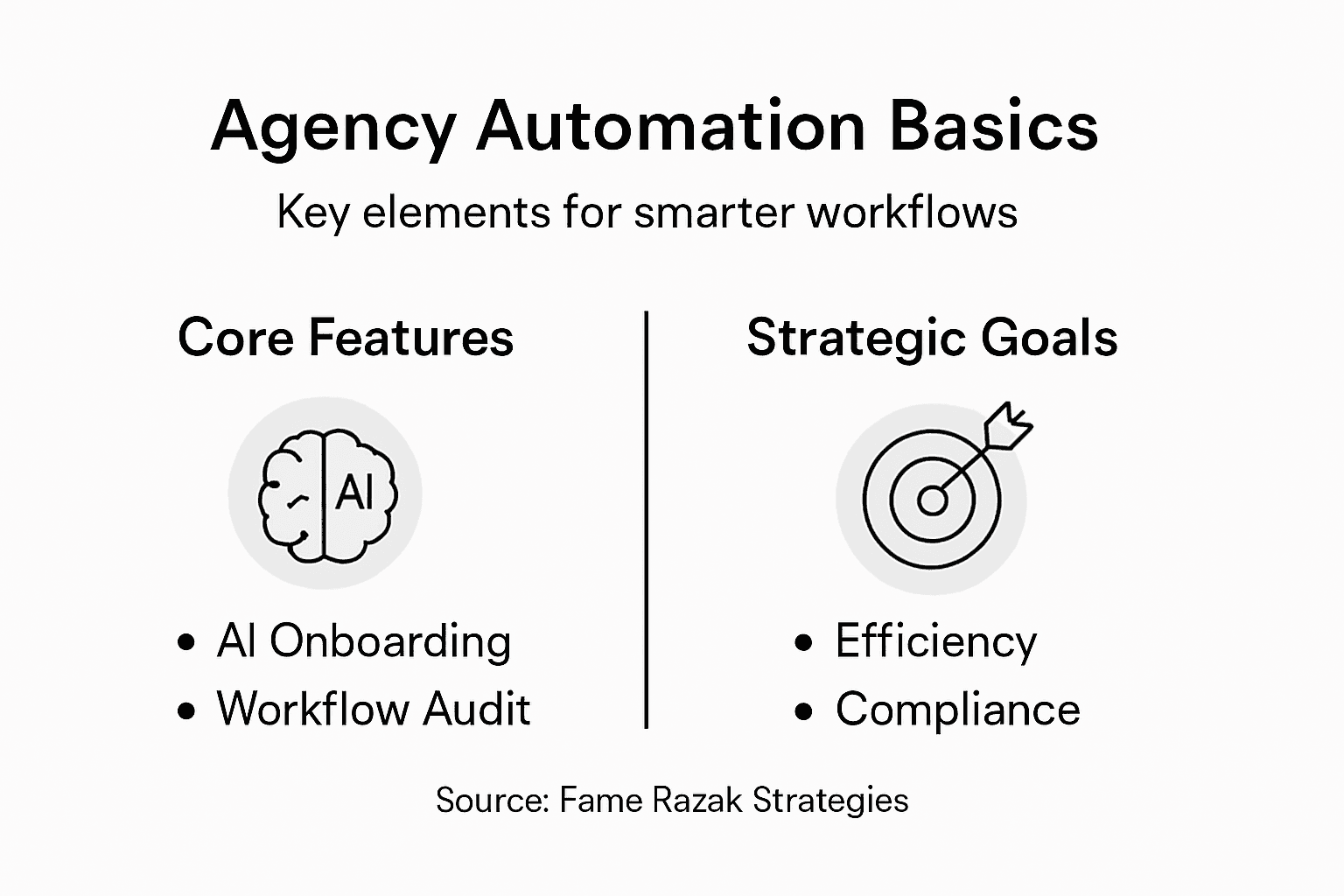
Successful AI onboarding implementation demands a strategic approach that balances technological capabilities with human oversight. Agencies must view these solutions as collaborative tools that augment human expertise rather than replace traditional relationship-building mechanisms.
Pro tip: Pilot your AI onboarding solution with a small client segment to refine interaction flows and validate performance before full-scale deployment.
Risks, Costs And Legal Compliance In 2026
Legal compliance is rapidly becoming a complex technological and strategic challenge for organisations navigating an increasingly sophisticated regulatory landscape. Compliance technologies are evolving dynamically to address emerging risks associated with digital transformation and financial regulations.
Key compliance considerations for agencies in 2026 include:
- Advanced Fraud Detection: Implementing sophisticated monitoring systems
- Data Privacy Governance: Ensuring robust protection of sensitive information
- AI Ethical Framework: Developing transparent algorithmic decision-making processes
- Regulatory Adaptation: Maintaining flexibility in changing legal environments
- Risk Management Technologies: Integrating adaptive security models
Emerging legal risks emphasise critical governance requirements that demand proactive and strategic approaches. Organizations must invest in continuous skill enhancement, technological infrastructure, and comprehensive risk assessment mechanisms to remain compliant and competitive.
Successful navigation of these complex landscapes requires a holistic approach that balances technological innovation with rigorous legal and ethical standards. Agencies must develop dynamic compliance strategies that anticipate regulatory shifts and integrate seamlessly with their operational frameworks.
Pro tip: Establish a dedicated cross-functional compliance team that combines legal expertise, technological understanding, and strategic planning to effectively manage evolving regulatory challenges.
Unlock Smarter Automation With Strategic Agency Solutions
If your agency struggles with aligning digital strategy to operational goals or faces challenges in client onboarding and workflow automation, you are not alone. This article highlights key pain points such as integrating intelligent process automation, managing compliance risks, and adapting to evolving digital landscapes. Concepts like “digital-first mindset” and “adaptive learning mechanisms” show that successful transformation demands more than technology — it requires scalable systems designed to grow with your agency.
At Fame Razak, we specialise in helping small businesses and agencies overcome these exact challenges. Our expertise as a Fractional CTO with deep agency roots means we focus on turning everyday operations into efficient, intelligent workflows. Whether it is streamlining client onboarding with AI solutions or orchestrating your entire digital strategy, we offer practical, tailored systems that free your team from repetitive tasks. Discover how to transform your agency’s digital roadmap by visiting Fame Razak and explore how to automate the work that slows you down today. Don’t wait to empower your agency with smarter automation — start building scalable, compliant, and future-ready systems now at Fame Razak.
Take the first step in your digital transformation journey with insights on workflow orchestration and discover personalised AI receptionists designed to elevate client experiences. Your agency’s future starts here.
Frequently Asked Questions
What is a digital strategy in the context of an agency?
A digital strategy for agencies refers to a comprehensive framework that guides the integration of digital technologies and processes to meet business objectives, enhance operational efficiency, and improve client experiences.
What are the key components of an effective digital strategy for agencies?
Key components include clear technological roadmapping, robust governance frameworks, scalable infrastructure design, continuous skills development, and agile adaptation mechanisms.
How can automation tools improve agency operations?
Automation tools can streamline workflows, provide real-time data analytics, reduce manual labour, and enhance overall process efficiency, allowing agencies to focus on strategic goals and client engagement.
What considerations should agencies have for legal compliance in 2026?
Agencies should focus on advanced fraud detection, data privacy governance, AI ethical frameworks, regulatory adaptation, and integrating risk management technologies to navigate the evolving legal landscape.
Recommended
- 7 Key Digital Agency Trends 2025 for Smarter Operations – Fame Razak
- Digital Agency Onboarding Checklist for Streamlined Automation – Fame Razak
- How to Future-Proof Agency Tech for Scalable Growth – Fame Razak
- 7 Top Digital Agency Challenges and How to Overcome Them – Fame Razak
- 8 Examples of Digital Marketing to Boost Your Business – Paul Baguley
- Why Automate WordPress Tasks for Business Efficiency – WPCTO
- Workflow Automation in B2B: Driving Multi-Channel Sales