
Digital and Social Media Marketing – Driving Growth in Health and Wellness
Over 60 percent of British health and wellness businesses now rely on digital and social media marketing to connect with clients and grow their practices. As more London-based professionals compete for attention online, understanding these strategies means more than just keeping up with trends. This article shows how clear, targeted online marketing and smart automation can turn casual viewers into loyal, engaged clients—giving your company the edge in a crowded market.
Table of Contents
- Defining Digital And Social Media Marketing
- Types Of Digital And Social Media Channels
- How Automation Transforms Client Engagement
- Key Tools And Metrics For Measuring Success
- Risks, Compliance, And Common Pitfalls
Key Takeaways
| Point | Details |
|---|---|
| Digital Marketing Transformation | Digital and social media marketing have revolutionised client engagement in health and wellness, enabling precise targeting and real-time interaction. |
| Utilising Diverse Channels | Health professionals should strategically select from various digital platforms to maximise their outreach based on audience preferences. |
| Importance of Automation | Automation technologies enhance client interaction by personalising communications and streamlining responses, improving efficiency and satisfaction. |
| Navigating Compliance | Organisations must remain vigilant in adhering to regulatory standards to mitigate risks associated with patient data and advertising regulations. |
Defining Digital And Social Media Marketing
Digital and social media marketing represents a strategic approach to reaching and engaging audiences through online platforms and technologies. In the health and wellness sector, these marketing techniques have transformed how businesses communicate, educate, and connect with potential clients. Digital marketing strategies have fundamentally reshaped consumer information-seeking patterns, particularly accelerating during the global pandemic.
At its core, digital marketing encompasses a range of online strategies designed to promote products, services, and brand messaging across digital channels. This includes website content, social media posts, email campaigns, search engine optimisation, and targeted digital advertising. For health and wellness professionals, these tools offer unprecedented opportunities to share expertise, build trust, and reach specific demographic groups with precision and effectiveness.
Social media marketing specifically focuses on leveraging platforms like Instagram, Facebook, LinkedIn, and Twitter to create meaningful interactions and build community. Unlike traditional marketing methods, these digital channels allow for real-time engagement, two-way communication, and granular audience targeting. Social media platforms have become major determinants in health communication, democratising access to health information and enabling practitioners to share valuable insights directly with their target audiences.
Pro tip: When developing your digital marketing strategy, focus on creating authentic, value-driven content that addresses your audience’s specific health and wellness needs rather than purely promotional messaging.
Types Of Digital And Social Media Channels
Health and wellness professionals have access to an expansive array of digital and social media channels that enable targeted communication and engagement. These platforms range from specialised social networks to multimedia sharing sites, each offering unique opportunities for health communication, creating diverse pathways for reaching and influencing audiences.
The primary digital channels include social networking platforms such as Facebook, Instagram, LinkedIn, and Twitter, which allow for direct interaction and community building. Multimedia platforms like YouTube and TikTok enable video-based health education and storytelling, while professional forums and specialised health networks provide spaces for more in-depth, expert-driven conversations. Blogs, podcasts, and webinar platforms further expand the digital communication landscape, offering comprehensive and long-form content delivery methods.
Digital health communication technologies now encompass mobile apps, wearable devices, and interactive online platforms, transforming how health information is shared and consumed. These channels support various engagement strategies, from real-time health tracking and personalised wellness recommendations to community support groups and professional networking. Each platform offers distinct advantages, allowing health and wellness professionals to craft nuanced, targeted messaging that resonates with specific audience segments.
Here is a comparison of major digital and social media channels for health and wellness marketing:
| Channel Type | Strengths | Typical Uses |
|---|---|---|
| Social Networking | Community building, engagement | Sharing updates, networking |
| Multimedia Platforms | Visual storytelling, education | Video explainers, health campaigns |
| Professional Forums | Expert insights, discussion | Peer learning, specialist Q&A |
| Blogs & Podcasts | Depth, long-form content | In-depth topics, interviews, guides |
| Mobile Apps | Interactivity, personalisation | Wellness tracking, tailored reminders |
Pro tip: Select digital channels strategically by understanding your target audience’s preferred platforms and communication styles, rather than attempting to maintain a presence on every available network.
How Automation Transforms Client Engagement
Artificial intelligence and automation are fundamentally reshaping client engagement strategies across the health and wellness sector, enabling businesses to create more personalised, responsive, and scalable interactions. These technological advancements allow organisations to move beyond traditional communication models, implementing sophisticated systems that anticipate client needs and deliver tailored experiences with unprecedented efficiency.
Automation technologies such as intelligent chatbots, predictive analytics, and personalised communication workflows enable health and wellness professionals to streamline client interactions. These tools can automatically segment audiences, track individual client preferences, and generate contextually relevant content and recommendations. By integrating machine learning algorithms, businesses can now develop dynamic engagement strategies that adapt in real-time, providing clients with highly personalised health and wellness journeys.

Advanced automation strategies are transforming customer engagement through data-driven personalisation techniques, allowing for nuanced, targeted communication across multiple digital channels. Sophisticated automation platforms can now manage complex client interactions, from initial enquiry through to ongoing support, using intelligent routing, automated follow-ups, and contextually aware communication protocols. This approach not only improves client satisfaction but also significantly reduces administrative overhead for health and wellness businesses.
Pro tip: Implement automation incrementally, focusing first on high-impact, repetitive client interaction points to build confidence and demonstrate tangible improvements in engagement and efficiency.
Key Tools And Metrics For Measuring Success
Comprehensive digital marketing effectiveness relies on sophisticated measurement strategies that go beyond surface-level analytics. Health and wellness businesses must develop robust frameworks for tracking performance across multiple digital channels, understanding how different metrics interconnect to provide meaningful insights into marketing impact and client engagement.
Key performance indicators (KPIs) for digital marketing in health and wellness typically include engagement rates, conversion metrics, client acquisition costs, and return on investment. These metrics help organisations understand the nuanced interactions between marketing efforts and actual business outcomes. Advanced tracking tools like Google Analytics, social media platform insights, and specialised healthcare marketing dashboards enable precise measurement of campaign performance, audience behaviour, and the effectiveness of different communication strategies.
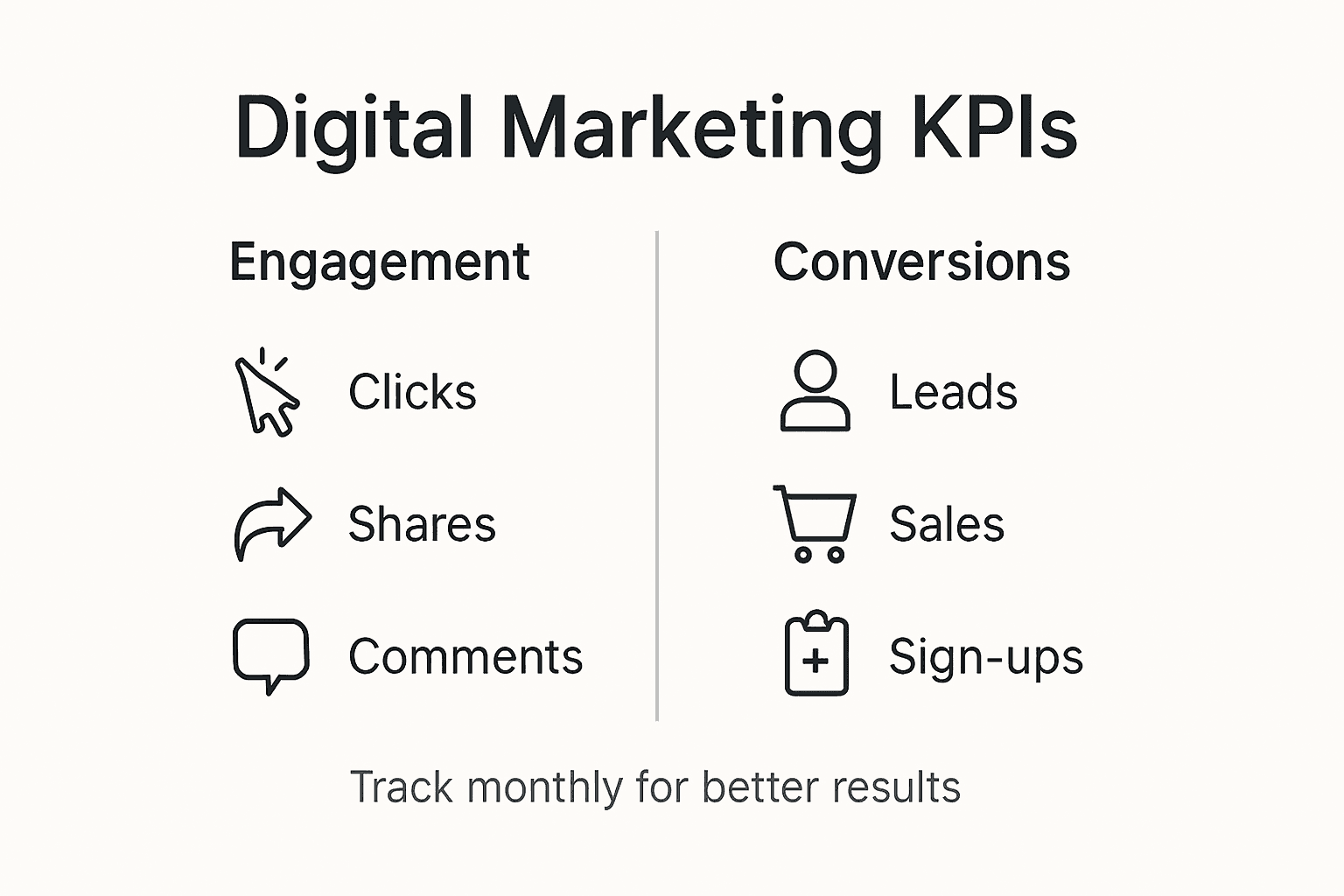
Social media marketing KPIs provide critical insights into audience reach, interaction quality, and conversion potential, offering health and wellness professionals granular understanding of their digital marketing effectiveness. Critical metrics include follower growth, content engagement rates, click-through rates, lead generation efficiency, and the monetary value of conversions. By systematically analysing these indicators, businesses can refine their digital marketing approaches, allocate resources more strategically, and develop increasingly targeted communication campaigns.
Pro tip: Establish a consistent monthly review process for your digital marketing metrics, comparing performance against historical data and industry benchmarks to identify trends and opportunities for continuous improvement.
Risks, Compliance, And Common Pitfalls
Digital health marketing presents complex regulatory challenges that demand meticulous attention to legal and ethical standards, particularly regarding information accuracy, patient privacy, and responsible communication. Health and wellness organisations must navigate a sophisticated landscape of regulatory requirements that span multiple jurisdictions and platforms.
The most critical compliance risks in digital marketing include patient data protection, medical claim verification, and platform-specific advertising regulations. HIPAA guidelines, FDA restrictions, and emerging international data protection laws create a multifaceted compliance environment that requires continuous monitoring and adaptive strategies. Organisations must implement robust verification processes to ensure all digital content meets stringent legal and ethical standards, avoiding potential legal repercussions and reputational damage.
Healthcare marketing on digital platforms demands careful navigation of complex regulatory frameworks, with specific risks including unverified medical claims, patient privacy breaches, and inappropriate targeting of vulnerable populations. Common pitfalls include inadvertently sharing patient-identifiable information, making unsubstantiated health claims, and failing to obtain proper consent for data usage. Successful digital marketing strategies require a proactive approach to compliance, integrating legal expertise into every stage of content creation and distribution.
This table summarises common digital health compliance pitfalls and expert strategies to overcome them:
| Compliance Risk | Example Issue | Effective Mitigation Approach |
|---|---|---|
| Patient Data Protection | Unauthorised info sharing | Encrypt data, staff training |
| Medical Claim Verification | Unsubstantiated health claims | Expert review, cite credible sources |
| Platform Advertising Rules | Content removed by platform | Update content for each platform |
| Consent for Data Usage | Missing user permissions | Obtain explicit consent, clear terms |
Pro tip: Develop a comprehensive compliance checklist that includes legal review, content verification, and regular audits of your digital marketing materials to mitigate risks and maintain professional standards.
Unlock Scalable Growth with Intelligent Automation for Health and Wellness
The article highlights key challenges faced by health and wellness professionals such as creating authentic digital engagement, managing complex client interactions, and ensuring regulatory compliance while maintaining personalised communication. These pain points call for smarter solutions that can automate repetitive tasks like client onboarding, scheduling, and personalised follow-ups — freeing up time to focus on meaningful wellness work.
At Fame Razak, we specialise in transforming everyday operations into scalable intelligent systems designed to empower small businesses and agencies in the health sector. Imagine harnessing tools like AI receptionists and workflow orchestration to streamline your digital marketing strategies and enhance client engagement. To start accelerating your growth with automation tailored to your unique needs, explore how we can help you automate and optimise your health and wellness services at Fame Razak. Take control now and turn your digital marketing efforts into consistent, measurable success.
Frequently Asked Questions
What is digital and social media marketing in health and wellness?
Digital and social media marketing in health and wellness involves strategic online approaches to engage audiences through various platforms, including social media, email, and websites. These techniques help health professionals promote their services, educate their audience, and foster community engagement.
How can health and wellness professionals benefit from automation in client engagement?
Health and wellness professionals can benefit from automation by creating personalised, timely interactions with clients. Tools like intelligent chatbots and predictive analytics enable efficient communication, tailored recommendations, and real-time support, enhancing client satisfaction and reducing administrative costs.
What are some key metrics to measure the success of digital marketing efforts?
Key metrics for evaluating digital marketing success include engagement rates, conversion metrics, client acquisition costs, and return on investment (ROI). Using advanced tracking tools can help professionals understand audience behaviour and refine their marketing strategies.
What are some common compliance risks in digital health marketing?
Common compliance risks include patient data protection violations, unverified medical claims, and inappropriate targeting of vulnerable populations. It is crucial for health organisations to adhere to regulations like HIPAA and the FDA guidelines, ensuring that all content and communication meet legal and ethical standards.