
Over 60 percent of british small businesses say digital marketing determines their ability to compete with major brands. The fast-evolving world of online promotion now demands more than guesswork or sporadic social media updates. Understanding what makes digital marketing strategy effective today means uncovering the powerful, data-driven tactics that set thriving british companies apart and learning how even modest budgets can deliver measurable results in a crowded marketplace.
Table of Contents
- What Digital Marketing Strategy Means Today
- Types of Digital Marketing Strategy Approaches
- Key Components for Small Businesses and Agencies
- How Automation and AI Transform Strategy
- Common Challenges and How to Avoid Them
Key Takeaways
| Point | Details |
|---|---|
| Data-Driven Strategies | Modern digital marketing requires a data-driven approach to effectively engage audiences through personalised experiences and precision targeting. |
| Integration of Technologies | Leveraging automation and AI allows businesses to optimise marketing processes, anticipating customer behaviours and enabling hyper-personalisation. |
| Holistic Marketing Approaches | Successful digital strategies integrate multiple channels, maximising online visibility and engagement through a cohesive marketing framework. |
| Continuous Learning | Adapting to rapid technological changes is essential; businesses should invest in skills development to stay competitive and meet evolving customer expectations. |
What Digital Marketing Strategy Means Today
Digital marketing strategy has rapidly transformed from traditional advertising approaches into a sophisticated, data-driven ecosystem that demands intelligent navigation. Modern businesses now recognise that digital strategy isn’t about sporadic social media posts or generic advertising campaigns, but a comprehensive approach to connecting with audiences through precision targeting and personalised experiences.
Today’s digital marketing strategy fundamentally revolves around leveraging advanced technologies to understand and engage customers. Personalised, data-driven approaches now utilise artificial intelligence to analyse complex customer behaviours, predicting preferences and optimising marketing campaigns with unprecedented accuracy. This means small businesses can now access sophisticated marketing techniques previously available only to large corporations with extensive resources.
The core components of contemporary digital marketing strategy include:
- Audience Segmentation: Using granular data to create highly targeted marketing messages
- Predictive Analytics: Anticipating customer needs before they emerge
- Multichannel Integration: Creating seamless experiences across digital platforms
- Automation: Streamlining repetitive marketing tasks for maximum efficiency
Small businesses that embrace these strategic principles can dramatically improve their digital presence, transforming limited marketing budgets into powerful engagement tools. By understanding customer journeys, leveraging intelligent technologies, and creating genuinely valuable content, organisations can achieve remarkable marketing outcomes without requiring massive financial investments.
Types of Digital Marketing Strategy Approaches
Digital marketing comprises multiple sophisticated approaches that enable businesses to reach and engage their target audiences effectively. Comprehensive digital marketing strategies encompass a diverse range of tactics designed to maximise online visibility and customer interaction across various digital platforms.
Key digital marketing approaches include:
- Search Engine Optimization (SEO): Enhancing website visibility in organic search results
- Content Marketing: Creating valuable, relevant content to attract and retain audiences
- Social Media Marketing: Leveraging social platforms to build brand awareness and engagement
- Pay-Per-Click (PPC) Advertising: Targeted paid advertising across search engines and social media
- Email Marketing: Direct communication with potential and existing customers
- Influencer Marketing: Collaborating with digital personalities to extend brand reach
Each digital marketing strategy offers unique advantages, with successful implementation requiring a nuanced understanding of target audience behaviours and platform-specific dynamics. Small businesses can strategically combine these approaches to create a robust digital presence, maximising limited marketing resources through intelligent, data-driven tactics.
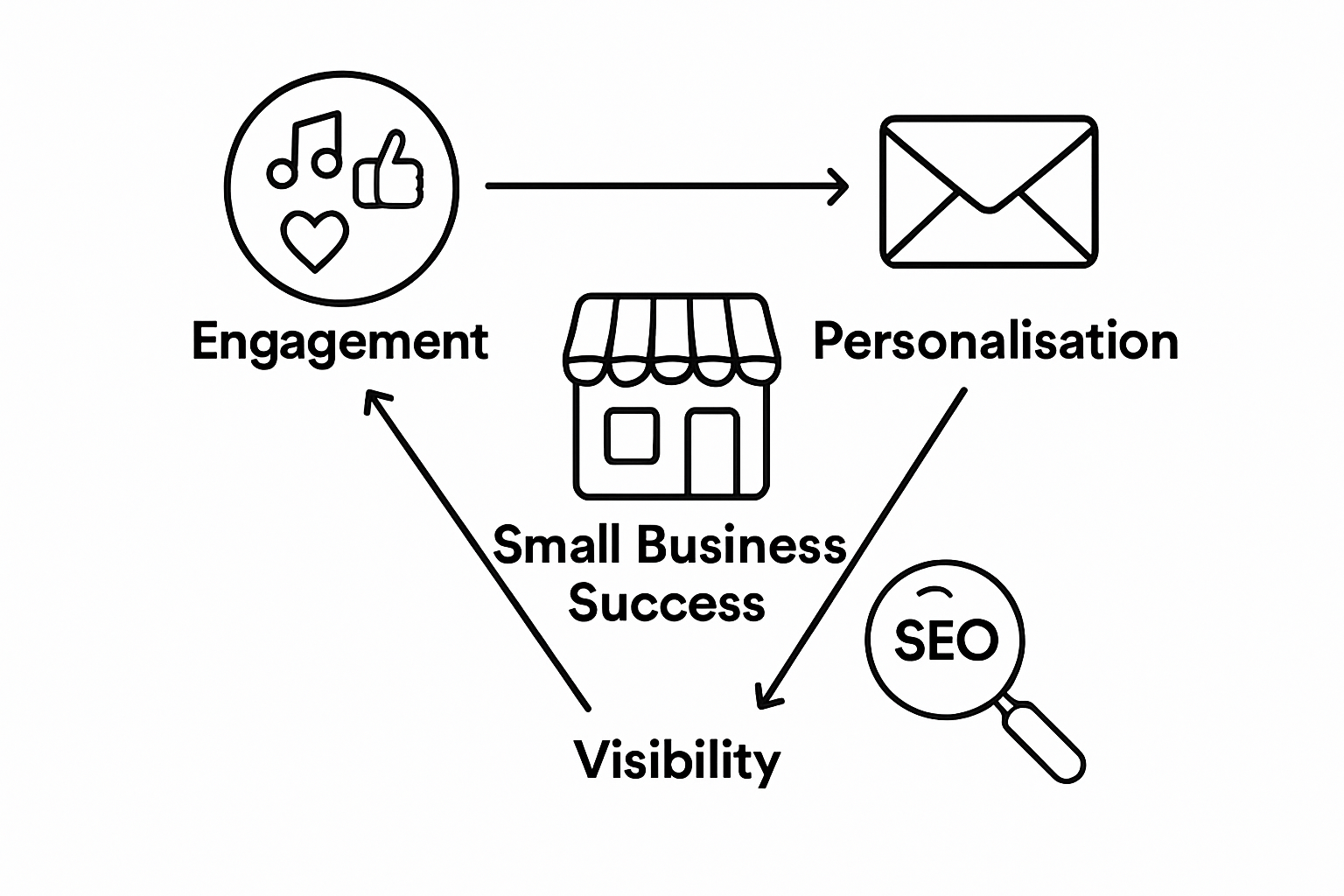
The most effective digital marketing strategies integrate multiple channels, creating a cohesive approach that allows businesses to reach customers through diverse touchpoints. By understanding the strengths of each digital marketing method, organisations can craft personalised, impactful campaigns that resonate with their specific audience segments and drive meaningful engagement.
Key Components for Small Businesses and Agencies
Digital marketing success for small businesses and agencies requires a strategic approach that maximises limited resources while delivering measurable results. Essential marketing components create a robust framework that enables organisations to build brand authority and engage customers effectively across multiple digital channels.
Key components for small businesses and digital agencies include:
- Social Media Marketing: Building brand presence and community engagement
- Content Marketing: Developing valuable, targeted content that attracts potential customers
- Email Marketing: Nurturing leads and maintaining direct communication channels
- Affiliate Marketing: Expanding reach through strategic partnerships
- Performance Analytics: Tracking and measuring marketing campaign effectiveness
- Customer Relationship Management: Centralising and optimising customer interactions
Successful implementation requires a holistic approach that integrates these components seamlessly. Small businesses must focus on creating targeted, data-driven strategies that align with their specific audience needs, leveraging digital tools to punch above their weight in competitive markets.

The most sophisticated digital marketing approaches recognise that each component serves a unique purpose in the customer journey. By understanding how these elements interconnect, small businesses can create a dynamic marketing ecosystem that adapts to changing market conditions, maximises limited budgets, and delivers consistent, measurable results.
How Automation and AI Transform Strategy
Automation and artificial intelligence are fundamentally reshaping digital marketing strategies for small businesses, offering unprecedented capabilities to analyse, predict, and engage with target audiences. AI-powered marketing technologies enable organisations to transcend traditional limitations, transforming complex marketing processes into intelligent, adaptive systems.
Key transformative capabilities of AI and automation include:
- Hyper-Personalisation: Delivering precisely targeted content and experiences
- Predictive Analytics: Anticipating customer behaviours and preferences
- Real-Time Campaign Optimization: Dynamically adjusting marketing strategies
- Intelligent Content Generation: Creating contextually relevant marketing materials
- Automated Customer Interaction: Managing communications through intelligent systems
- Performance Prediction: Forecasting marketing outcomes with high accuracy
Small businesses can leverage these technologies to compete with larger organisations, using sophisticated algorithms to analyse vast amounts of data and generate insights that would be impossible through manual processes. The strategic implementation of AI allows businesses to make data-driven decisions, reduce operational costs, and create more meaningful customer interactions.
The most powerful aspect of AI-driven marketing is its ability to continuously learn and adapt. By implementing intelligent automation, small businesses can create dynamic marketing ecosystems that evolve in real-time, responding to changing customer behaviours and market conditions with remarkable precision and efficiency.
Common Challenges and How to Avoid Them
Digital marketing presents a complex landscape of challenges that can overwhelm small businesses and agencies seeking to establish a robust online presence. Navigating digital marketing complexities requires strategic understanding and proactive approach to mitigate potential obstacles before they become significant barriers to growth.
Key challenges small businesses frequently encounter include:
- Rapidly Changing Technologies: Keeping pace with continuous digital innovations
- Data Privacy Concerns: Maintaining customer trust and regulatory compliance
- Content Relevance: Creating consistently engaging and valuable marketing materials
- Limited Resource Allocation: Balancing marketing investments with measurable outcomes
- Technology Integration: Seamlessly connecting different marketing platforms
- Skill Gap: Developing internal digital marketing capabilities
Successful digital marketing strategies demand continuous learning and adaptive planning. Small businesses must invest in ongoing skills development, remain flexible in their approach, and develop a comprehensive understanding of emerging digital technologies and customer expectations.
The most effective approach involves creating a dynamic, responsive marketing ecosystem that can quickly adapt to technological shifts and changing market conditions. By embracing a learning mindset, leveraging automation tools, and maintaining a customer-centric perspective, organisations can transform potential challenges into opportunities for strategic growth and innovation.
Unlock the Full Potential of Your Digital Marketing Strategy Today
Small businesses often face the challenge of navigating rapidly changing technologies and limited resources while striving to implement sophisticated digital marketing strategies that include audience segmentation, predictive analytics, and automation. These pain points can slow growth and reduce the real impact your marketing efforts could have. Recognising the need for intelligent, scalable solutions that simplify complex operations is key to turning marketing plans into measurable success.
At Fame Razak, we specialise in transforming everyday business processes into streamlined, automated workflows that free you to focus on high-value activities such as personalised customer engagement and multichannel integration. Whether you need help with AI-powered automation or orchestrating your entire marketing ecosystem, our practical approach as a Fractional CTO with deep agency expertise ensures small businesses get the scalable systems they need to compete effectively. Discover how to overcome the common hurdles of data privacy concerns, skill gaps, and technology integration by exploring real AI and automation solutions for small businesses and learn what to build and buy to maximise your digital marketing strategy impact.
Are you ready to stop letting manual tasks hold your business back Find out how to automate your marketing and operational workflows seamlessly by visiting our site and exploring how to manage tech teams and enhance collaboration. Take control of your digital marketing future now and get started on building a smarter, more efficient business at Fame Razak.
Frequently Asked Questions
What is a digital marketing strategy?
A digital marketing strategy is a comprehensive plan that outlines how a business will use digital channels to reach and engage its target audience effectively. It encompasses various elements such as audience segmentation, predictive analytics, and multichannel integration.
How can small businesses benefit from digital marketing?
Small businesses can benefit from digital marketing by accessing sophisticated marketing techniques that enhance their online presence, connect with customers, and transform limited budgets into powerful engagement tools through data-driven strategies.
What are the key components of a digital marketing strategy for small businesses?
Key components include social media marketing, content marketing, email marketing, affiliate marketing, performance analytics, and customer relationship management. These elements work together to build brand authority and engage customers effectively across multiple digital channels.
How do automation and AI improve digital marketing strategies?
Automation and AI improve digital marketing strategies by offering capabilities for hyper-personalisation, predictive analytics, real-time campaign optimisation, and streamlined customer interactions. This allows small businesses to compete effectively by making data-driven decisions and adapting to changing customer behaviours.
Recommended
- 7 Best Practices in Website Development for Small Businesses – Fame Razak
- Digital Transformation Checklist for Small Businesses Success – Fame Razak
- Digital Business Strategy: Everything You Need to Know – Fame Razak
- 7 Best Practices for Website Development Success – Fame Razak
- Tech for Small Businesses: Complete Guide for 2025 – Projector Display
- Understanding the Importance of Customer Communication – My WordPress
- How to Develop a Marketing Strategy for Small Business Success