
Digital Content Marketing: Automate Your Success
More than 60 percent of British small businesses report that digital content marketing drives stronger customer engagement than traditional ads. For health and beauty entrepreneurs in London, standing out online can feel challenging as the competition grows every year. This article shares how automation and AI-driven solutions can help you craft impactful campaigns, boost efficiency, and build trust with audience segments that matter most.
Table of Contents
- Digital Content Marketing Explained Clearly
- Major Content Types And Creative Formats
- How Automation And AI Improve Campaigns
- Top Uses For Small Health And Beauty Firms
- Common Mistakes And Risks To Watch For
Key Takeaways
| Point | Details |
|---|---|
| Strategic Content Marketing | Focus on creating tailored, high-quality content that builds relationships rather than solely driving sales. |
| Diverse Content Formats | Utilise various content types, such as blogs, videos, and podcasts, to engage different audience segments effectively. |
| Leveraging AI and Automation | Implement AI for personalisation and efficiency, but maintain human oversight to avoid losing brand authenticity. |
| Be Aware of Risks | Understand potential pitfalls in digital marketing automation and AI, ensuring a balanced approach that preserves customer connection. |
Digital content marketing explained clearly
Digital content marketing represents a strategic approach to creating and sharing valuable, targeted information designed to attract, engage, and convert specific audience segments. In the digital transformation era, businesses are shifting from traditional advertising towards more nuanced, relationship-driven communication strategies.
Modern digital content marketing focuses on developing meaningful audience connections through tailored content, prioritising engagement over direct sales pitches. This approach involves crafting relevant, high-quality materials that address customer needs, questions, and interests across multiple digital platforms. By understanding consumer behaviours and preferences, organisations can develop content that resonates deeply and builds long-term trust.
The core components of effective digital content marketing include diverse content formats such as:
- Blog articles and long-form guides
- Short-form social media posts
- Video tutorials and explainer content
- Interactive multimedia experiences
- Podcasts and audio content
- Infographics and visual storytelling
Successful digital content marketing requires a strategic approach that combines creative storytelling with data-driven insights. Marketers must continuously analyse audience engagement, adapt their content strategies, and leverage emerging digital technologies to remain competitive.
Pro tip: Create a content calendar that maps out your digital marketing materials three months in advance, ensuring consistent messaging and strategic topic selection.
Major content types and creative formats
Digital content marketing encompasses a wide array of creative formats designed to engage and inform audiences across different platforms. Content types and formats play a crucial role in communicating strategic messages, allowing businesses to tailor their communication approach to specific audience segments and customer journey stages.
The most effective digital content strategies incorporate diverse formats that cater to varied audience preferences. Key content types include:
- Blog posts and long-form articles
- Video content (tutorials, explainer videos, interviews)
- Podcasts and audio narratives
- Infographics and visual data presentations
- Interactive quizzes and assessments
- Email newsletters
- Case studies and research reports
- Social media posts and micro-content
Each content format serves unique purposes in digital marketing. Short-form social media content can quickly capture attention, while long-form articles provide in-depth insights. Video content offers dynamic storytelling, and podcasts enable audiences to consume information during various activities. The strategic selection of content types depends on understanding audience behaviours, platform dynamics, and specific marketing objectives.
Successful digital content marketing requires continuous experimentation and adaptation. Marketers must analyse engagement metrics, audience feedback, and emerging digital trends to refine their content strategies and maintain relevance across different channels.
Here’s a summary comparing the main digital content types and their business impact:
| Content Type | Primary Audience Benefit | Business Impact |
|---|---|---|
| Blog Articles | In-depth guidance | Boosts SEO and expertise |
| Video Tutorials | Visual learning | Enhances brand engagement |
| Podcasts | On-the-go education | Builds loyalty and trust |
| Infographics | Quick data comprehension | Improves social sharing rates |
| Social Media Posts | Instant updates | Expands reach and awareness |
| Interactive Quizzes | Personalised engagement | Increases user data collection |
Pro tip: Create a content matrix that maps different content types against your target audience personas, ensuring you develop a balanced and targeted content strategy.
How automation and AI improve campaigns
Artificial Intelligence has revolutionised digital marketing by enabling sophisticated campaign optimisation through advanced data analysis and personalisation techniques. AI-driven technologies enhance marketing effectiveness by analysing vast consumer datasets and predicting behavioural patterns, allowing businesses to create more targeted and responsive marketing strategies.
Automation and AI technologies provide multiple strategic advantages for digital marketing campaigns:
- Personalised content generation
- Real-time audience segmentation
- Predictive consumer behaviour analysis
- Automated sentiment tracking
- Dynamic content optimization
- Efficient performance monitoring
- Intelligent recommendation systems
- Automated customer interaction management
Marketing teams can leverage AI to transform campaign performance by implementing intelligent automation tools that streamline content creation, distribution, and performance tracking. These technologies enable marketers to develop more nuanced, data-driven strategies that respond quickly to changing audience preferences and market dynamics.

The integration of AI into marketing workflows requires careful consideration of ethical implications and transparency. Successful implementation depends on maintaining a balance between technological capabilities and human creativity, ensuring that automated systems enhance rather than replace strategic marketing thinking.
Pro tip: Implement a phased AI integration strategy, starting with small, measurable automation projects to build confidence and demonstrate tangible marketing improvements.
Top uses for small health and beauty firms
Small health and beauty firms are increasingly leveraging Artificial Intelligence to transform their operational and marketing strategies. AI-powered technologies are revolutionising customer engagement through advanced virtual try-on experiences and personalised product recommendations, enabling businesses to create more interactive and targeted customer interactions.
Key AI applications for health and beauty firms include:
- Virtual skin analysis and personalised product recommendations
- AI-generated marketing content and imagery
- Intelligent customer service chatbots
- Automated trend prediction and market insights
- Personalized customer experience design
- Real-time customer interaction management
- Predictive inventory and stock management
- Dynamic pricing and promotional strategies
These technological innovations allow small health and beauty businesses to compete more effectively with larger brands by providing sophisticated, personalised customer experiences. AI tools help firms understand individual customer preferences, streamline marketing efforts, and create more targeted engagement strategies that feel intimate and responsive.
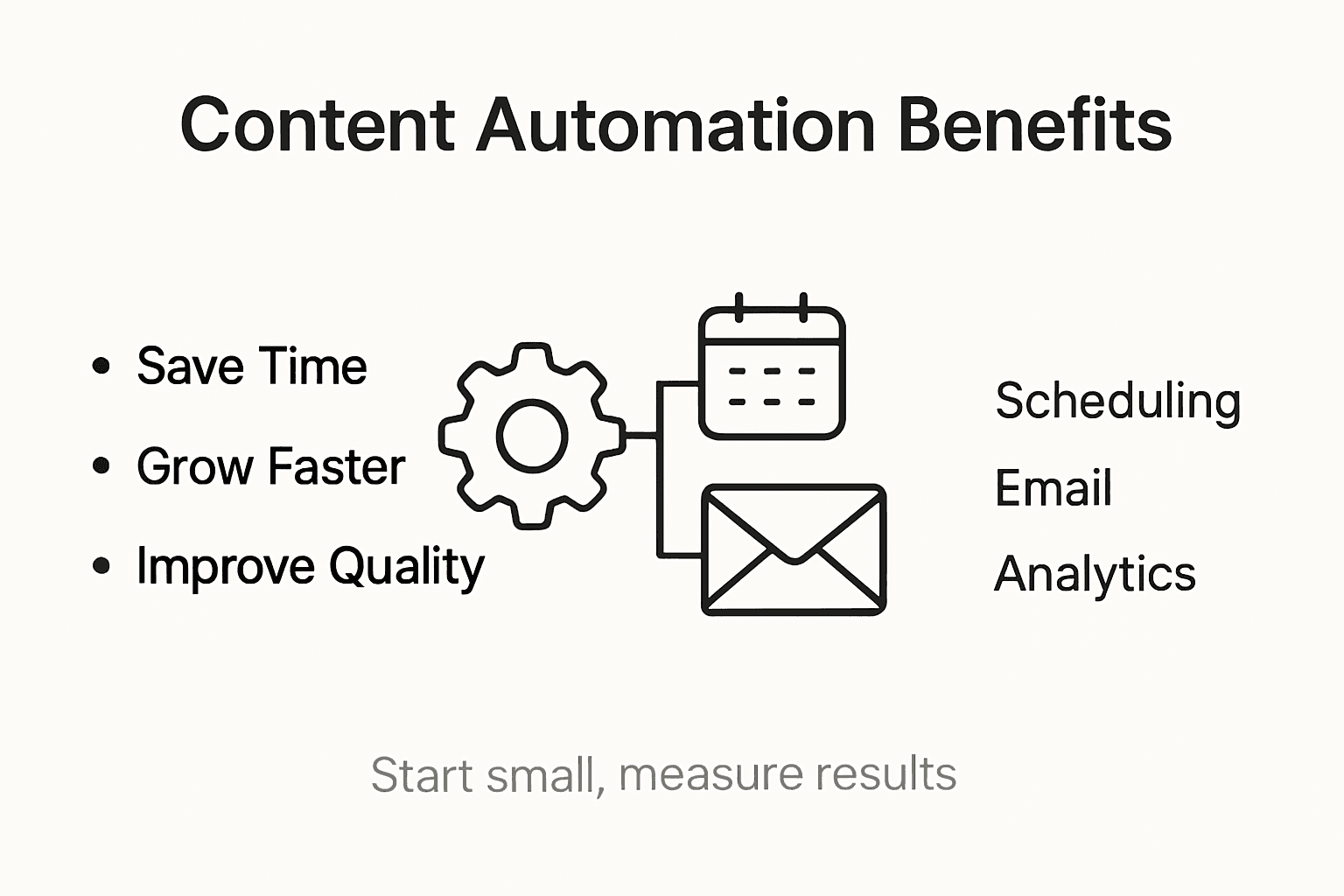
Successful implementation requires a strategic approach that balances technological capabilities with genuine human connection. Small firms must carefully select AI tools that enhance rather than replace personal interaction, ensuring that technology supports their unique brand identity and customer relationships.
Pro tip: Start with one AI-driven marketing tool that directly addresses your most significant customer engagement challenge, and gradually expand your technological capabilities.
Common mistakes and risks to watch for
Digital marketing automation introduces significant technological opportunities, but small businesses must navigate potential pitfalls carefully. Organisations must be aware of critical risks that can compromise their marketing effectiveness and brand integrity, particularly when implementing AI-driven strategies without proper oversight.
Key risks and common mistakes in digital marketing automation include:
- Content homogenisation and loss of brand uniqueness
- Insufficient human oversight leading to inaccurate messaging
- Potential copyright and intellectual property violations
- Over-reliance on automated systems
- Lack of personalisation despite technological capabilities
- Neglecting data privacy and consent regulations
- Compromising authentic customer interactions
- Technical integration challenges
Successful implementation requires a balanced approach that combines technological capabilities with human creativity and strategic thinking. Businesses must develop robust governance frameworks that ensure AI tools enhance rather than replace genuine human connection, maintaining the nuanced understanding that differentiates exceptional marketing.
Companies should approach AI integration as a collaborative process, continuously monitoring performance, gathering feedback, and refining automated systems. This requires ongoing training, periodic system audits, and a commitment to maintaining ethical standards and brand authenticity.
Below, compare AI benefits for small health and beauty firms with related risks to address:
| AI Advantage | Potential Risk | Risk Mitigation Approach |
|---|---|---|
| Virtual product recommendations | Data privacy concerns | Strong consent management |
| Automated customer chatbots | Lack of authentic connection | Blend automation with personal touch |
| Predictive stock management | Integration difficulties | Phased deployment and training |
| Dynamic pricing adjustments | Over-reliance on algorithms | Regular human oversight |
Pro tip: Develop a comprehensive AI implementation checklist that includes regular human review, performance benchmarks, and clear guidelines for maintaining your brand’s unique voice.
Automate Your Digital Content Marketing Success Today
Creating personalised, engaging digital content while managing your marketing automation can feel overwhelming, especially when striving to maintain authentic customer connections and avoid common pitfalls like content homogenisation. This article highlights the importance of strategic AI integration and balanced automation to enhance your campaigns without losing your brand’s unique voice or human touch.
At Fame Razak, we specialise in transforming these challenges into streamlined, scalable solutions that help small businesses automate complex workflows from client onboarding to AI-driven marketing tools. Harness the power of intelligent automation and AI to:
- Personalise your content for better audience engagement
- Simplify repetitive tasks and improve efficiency
- Maintain oversight to preserve authenticity and compliance
Ready to turn your digital content marketing into an automated engine of growth with thoughtful AI application and expert guidance Visit Fame Razak now to explore practical strategies and start building intelligent systems that free your team to focus on what truly matters. Take action today because the future of marketing success depends on smart automation aligning with your unique brand identity.
Frequently Asked Questions
What is digital content marketing?
Digital content marketing is a strategic approach to creating and sharing valuable, targeted information designed to attract, engage, and convert specific audience segments, focusing on relationship-driven communication rather than traditional advertising.
How can AI improve digital content marketing campaigns?
AI can enhance digital content marketing campaigns by providing personalised content generation, real-time audience segmentation, predictive consumer behaviour analysis, and automated performance monitoring, allowing marketers to create more targeted and responsive strategies.
What are the key content types in digital content marketing?
Key content types include blog posts, video tutorials, podcasts, infographics, interactive quizzes, email newsletters, case studies, and social media posts. Each format serves unique purposes and caters to different audience preferences throughout the customer journey.
What are common mistakes to avoid in digital marketing automation?
Common mistakes include content homogenisation, insufficient human oversight, over-reliance on automated systems, lack of personalisation, and neglecting data privacy regulations. Balancing technology with human creativity is essential for successful implementation.
Recommended
- Basic Digital Marketing Concepts: What Every Service Business Needs to Know – Fame Razak
- Digital Marketing Strategy: Real Impact for Small Businesses – Fame Razak
- Digital and Social Media Marketing – Driving Growth in Health and Wellness – Fame Razak
- B2B Digital Marketing – Automating Client Acquisition – Fame Razak