
Nearly 90 percent of british companies believe that digital strategy directly shapes their ability to compete in fast-changing markets. As organisations face growing pressure to adapt, a clear digital business strategy moves beyond just adopting new tools. Understanding what sets a robust digital strategy apart can redefine how british brands grow, connect with customers, and futureproof their operations. This guide breaks down the essential concepts and shows how digital choices drive real-world results.
Table of Contents
- Defining Digital Business Strategy And Its Role
- Types Of Digital Business Strategies Explained
- Key Components Of An Effective Approach
- How To Develop And Implement Your Strategy
- Common Mistakes And How To Avoid Them
Key Takeaways
| Point | Details |
|---|---|
| Digital Business Strategy Definition | It integrates digital technologies and processes to transform how value is created and delivered, enabling competitive advantage. |
| Types of Digital Strategies | Strategies vary by focus, including product-led, customer experience-led, service-led, and efficiency-led approaches, reflecting distinct organisational goals. |
| Implementation Essentials | A systematic approach is needed that includes organisational assessment, strategic planning, talent alignment, and iterative improvement to drive effective digital transformation. |
| Common Pitfalls to Avoid | Mistakes often arise from misjudging digital transformation as mere tech upgrades, neglecting cultural readiness, and failing to set clear transformation objectives. |
Defining Digital Business Strategy and Its Role
A digital business strategy represents a comprehensive organisational approach that integrates digital technologies, processes, and capabilities to drive business performance and competitive advantage. Unlike traditional business strategies, this framework goes beyond merely implementing digital tools, focusing instead on fundamentally transforming how an organisation creates, delivers, and captures value through technological innovation.
At its core, digital business strategy involves strategically aligning digital capabilities with broader organisational objectives. Research demonstrates that successful implementations require a holistic view that encompasses technology, people, processes, and customer experience. Organisations must move beyond siloed digital initiatives and develop integrated approaches that enable seamless digital transformation across all business functions.
The primary role of a digital business strategy is to enable businesses to respond effectively to rapidly changing technological landscapes and evolving customer expectations. By creating flexible, adaptive frameworks, companies can leverage digital technologies to enhance operational efficiency, create new revenue streams, and develop more personalised customer experiences. This strategic approach allows businesses to not just survive but thrive in increasingly digital-first market environments, transforming potential technological disruptions into meaningful competitive opportunities.
Key elements of a robust digital business strategy typically include:
- Comprehensive technological assessment
- Clear digital transformation roadmaps
- Agile implementation methodologies
- Continuous innovation and learning processes
- Robust cybersecurity and data governance frameworks
Types of Digital Business Strategies Explained
Research indicates that digital business strategies are not one-size-fits-all, but rather emerge in distinct strategic patterns tailored to specific organisational goals and market contexts. Organisations typically develop digital strategies that align with their core business objectives, technological capabilities, and competitive positioning.
Four primary digital business strategy types have been identified by comprehensive research: product-led, customer experience-led, service-led, and efficiency-led approaches. Different strategic orientations directly influence how businesses select and implement digital marketing tactics, determining their technological investment, customer engagement methods, and overall digital transformation trajectory.

The product-led strategy focuses on using digital technologies to innovate and enhance product offerings, creating digital features that differentiate the organisation in the marketplace. Customer experience-led strategies prioritise seamless, personalised digital interactions across all customer touchpoints. Service-led approaches leverage digital platforms to redesign and optimise service delivery, while efficiency-led strategies concentrate on using digital tools to streamline internal processes, reduce operational costs, and improve organisational productivity.
Key characteristics of these digital business strategy types include:
- Product-Led Strategy:
- Emphasis on digital product innovation
- Rapid prototyping and iterative development
- Technology as a core differentiator
- Customer Experience-Led Strategy:
- Personalised digital interactions
- Omnichannel engagement
- Customer journey optimisation
- Service-Led Strategy:
- Digital service platform development
- Enhanced service accessibility
- Real-time service capabilities
- Efficiency-Led Strategy:
- Process automation
- Data-driven decision making
- Technological cost optimisation
Key Components of an Effective Approach
An effective digital business strategy requires a holistic approach that integrates technological innovation with organisational capabilities. Research demonstrates that successful digital transformations are not merely about implementing new technologies, but about creating a comprehensive ecosystem that enables continuous adaptation and strategic alignment.
Research highlights that artificial intelligence and entrepreneurial knowledge play crucial roles in developing robust digital strategies. The most successful organisations recognise that digital transformation is a dynamic process involving multiple interconnected components: strategic vision, technological infrastructure, talent development, cultural adaptability, and continuous learning mechanisms.
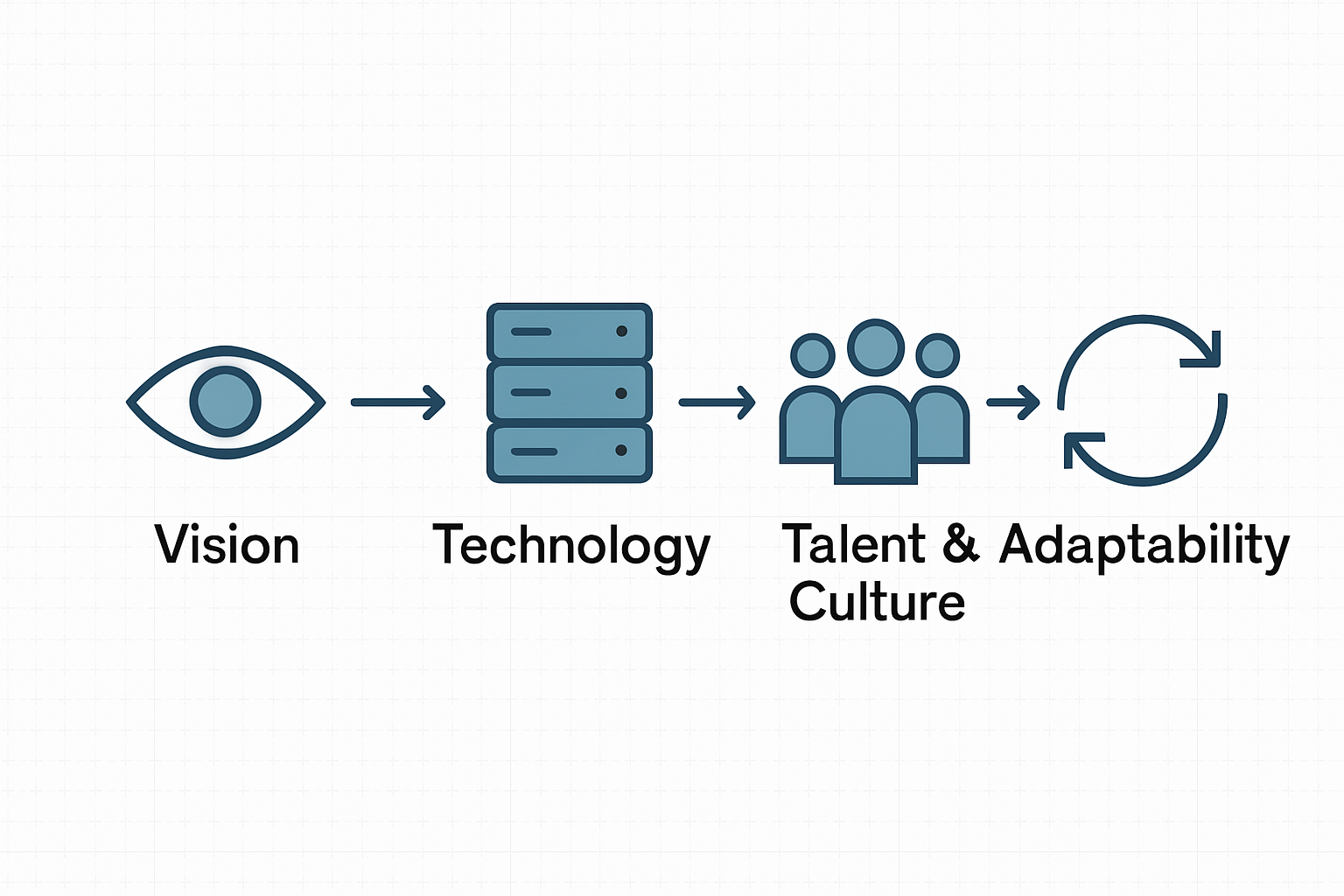
Key components of an effective digital business approach include strategic alignment, technological readiness, and organisational agility. Businesses must develop flexible frameworks that enable rapid response to technological changes, market shifts, and emerging customer expectations. This involves creating cross-functional teams, investing in continuous skills development, establishing data-driven decision-making processes, and maintaining a culture of innovation and experimentation.
Critical elements for building an effective digital business strategy comprise:
- Strategic Vision:
- Clear digital transformation roadmap
- Alignment with overall business objectives
- Long-term technological perspective
- Technological Infrastructure:
- Scalable digital platforms
- Interoperable systems
- Robust cybersecurity frameworks
- Talent and Culture:
- Continuous learning programmes
- Digital skills development
- Innovation-friendly organisational culture
- Adaptive Capabilities:
- Agile methodology adoption
- Rapid prototyping
- Iterative improvement processes
How to Develop and Implement Your Strategy
Developing an effective digital business strategy requires a systematic approach that treats the organisation as a dynamic, interconnected system. Successful implementation begins with a comprehensive assessment of your current technological capabilities, market positioning, and strategic objectives, creating a foundation for targeted digital transformation.
Strategic planning involves creating a robust framework for e-business strategies and digital marketing practices that align with your organisation’s core competencies and market opportunities. This process requires a multi-dimensional approach that encompasses technological infrastructure, talent development, customer engagement strategies, and continuous innovation mechanisms.
The implementation process typically follows a structured methodology: initial assessment, strategic planning, technology selection, talent alignment, pilot testing, and iterative refinement. Organisations must develop adaptive capabilities that enable rapid response to technological shifts, market changes, and emerging customer expectations. This involves creating cross-functional teams, establishing data-driven decision-making processes, and maintaining a culture of continuous learning and experimentation.
Key steps for developing and implementing a digital business strategy include:
- Comprehensive Organisational Assessment:
- Current technological capabilities audit
- Market positioning analysis
- Competitive landscape evaluation
- Strategic Planning:
- Define clear digital transformation objectives
- Identify technological requirements
- Develop roadmap with measurable milestones
- Technology and Talent Alignment:
- Select appropriate digital platforms
- Invest in skills development
- Create cross-functional innovation teams
- Implementation and Iterative Improvement:
- Pilot programme development
- Continuous performance monitoring
- Agile adaptation and refinement
Common Mistakes and How to Avoid Them
Digital business transformation failures often stem from fundamental misconceptions about technological implementation, with organisations frequently underestimating the complexity of strategic digital change. Understanding these common pitfalls is crucial for developing a resilient and effective digital business strategy that can successfully navigate technological transitions.
One of the most significant errors organisations make involves treating digital transformation as a technological upgrade rather than a comprehensive organisational change. Successful digital strategies require holistic approaches that integrate technological solutions with cultural adaptation, skills development, and strategic realignment. Businesses frequently miscalculate the human element, failing to invest sufficiently in change management, employee training, and creating an innovation-friendly organisational culture.
Premature technology adoption without clear strategic objectives represents another critical mistake. Organisations must develop a nuanced understanding of their specific technological requirements, avoiding the temptation to implement cutting-edge solutions that do not directly address core business challenges. This involves conducting thorough technological assessments, understanding existing infrastructure limitations, and creating phased implementation strategies that allow for iterative learning and adaptation.
Common digital business strategy mistakes include:
- Technology Misconceptions:
- Viewing digital transformation as mere technological replacement
- Neglecting organisational cultural readiness
- Implementing technologies without strategic alignment
- Strategic Planning Errors:
- Lack of clear digital transformation objectives
- Insufficient change management processes
- Inadequate skills development investment
- Implementation Challenges:
- Fragmented technological approach
- Resistance to continuous learning
- Overlooking cybersecurity considerations
- Resource Allocation Mistakes:
- Disproportionate technology spending
- Neglecting employee training
- Failure to create cross-functional innovation teams
Unlock Your Digital Business Potential with Scalable Automation
If you have been navigating the complexities of developing a digital business strategy, you know how challenging it can be to align technology with your broader organisational goals. Common pitfalls like underestimating cultural adaptation, fragmented technology adoption, and lack of strategic planning often slow down progress. This is where transforming your operational processes with intelligent automation can make a world of difference.
At Fame Razak, we specialise in automating the tasks that hold small businesses and agencies back from achieving true digital transformation. Whether it is streamlining client onboarding, scheduling, or building AI-driven workflows, our solutions help you focus on what truly matters while maintaining agility and continuous innovation. Discover practical ways to empower your workforce and turn your strategy into action by visiting the Fame Razak homepage and explore how our expertise in AI receptionists and workflow orchestration can transform your business. Ready to accelerate your digital business strategy and avoid costly mistakes Start building intelligent systems tailored for your needs today at Fame Razak.
Frequently Asked Questions
What is a digital business strategy?
A digital business strategy is a comprehensive organisational approach that integrates digital technologies, processes, and capabilities to enhance business performance and create competitive advantages, focusing on transformative value creation rather than just implementing digital tools.
How can organisations avoid common mistakes in digital business strategy?
To avoid common mistakes, organisations should view digital transformation as holistic, ensure strategic alignment with objectives, invest in employee training and change management, and conduct thorough technological assessments before adopting new tools.
What are the key components of an effective digital business strategy?
Key components include strategic vision, technological infrastructure, talent and culture, and adaptive capabilities, allowing businesses to create flexible frameworks that respond rapidly to market and technological changes.
What types of digital business strategies are there?
The primary types of digital business strategies are product-led, customer experience-led, service-led, and efficiency-led strategies, each focusing on specific organisational objectives and approaches to digital transformation.