
Most british organisations now face a digital crossroads, with over 70 percent of global companies acknowledging digital transformation as unavoidable for long term success. In an era where agility shapes every industry, understanding how to reimagine business processes through technology has become a defining factor for future growth. This article cuts through the noise to explain what business process digital transformation actually means, why it matters for british businesses, and how smart adaptation sets leaders apart.
Table of Contents
- Defining Business Process Digital Transformation
- Types of Digital Transformation Approaches
- How Automation Transforms Daily Operations
- Real-World Examples for Small Businesses
- Risks, Pitfalls and What to Avoid
Key Takeaways
| Point | Details |
|---|---|
| Strategic Integration | Business Process Digital Transformation involves comprehensive technological integration that enhances operational efficiency and flexibility. |
| Cultural Shift | Successful transformation requires reshaping organisational culture to embrace innovation and continuous learning. |
| Automation Benefits | Intelligent automation streamlines workflows and provides insights through technologies like digital twins, optimising operations. |
| Risk Management | Effective planning and mitigation strategies are crucial, as 95% of digital transformation efforts fail to realise their expected benefits. |
Defining Business Process Digital Transformation
Business Process Digital Transformation represents a strategic approach to reimagining and restructuring organisational workflows through advanced technological integration. At its core, this methodology focuses on leveraging digital technologies to fundamentally enhance operational efficiency, agility, and performance. Systematic reviews of Business Process Management reveal how organisations can systematically redesign their processes to drive innovation and adaptability.
The transformation process involves more than simply digitising existing workflows. It requires a holistic approach that encompasses technological implementation, cultural shifts, and strategic realignment. Digital transformation fundamentally changes how businesses operate, moving beyond traditional linear processes to create more dynamic, interconnected systems. Empirical research demonstrates that effective business architecture practices are critical in achieving successful digital transformation, enabling improved strategic outcomes and service delivery.
Key characteristics of Business Process Digital Transformation include:
- Comprehensive technological integration
- Continuous process improvement
- Data driven decision making
- Enhanced organisational flexibility
- Seamless cross functional collaboration
By embracing digital transformation, businesses can create more responsive, intelligent operational frameworks that adapt quickly to changing market demands and technological advancements.
Types of Digital Transformation Approaches
Digital transformation encompasses multiple strategic approaches that organisations can adopt to revolutionise their operational frameworks. Various transformation models demonstrate that digital initiatives are not one-size-fits-all, but rather require nuanced strategies tailored to specific organisational contexts and objectives.
One prominent approach involves cultural and organisational transformation, which focuses on reshaping internal workforce dynamics, mindsets, and capabilities. This model emphasises creating an innovative work environment that embraces technological change and fosters continuous learning. Comprehensive digital transformation frameworks reveal multiple strategic pathways, including:
- Cultural Transformation Model: Focusing on workforce adaptability and innovation
- Technological Ecosystem Model: Integrating advanced digital infrastructure
- Capability Maturity Model: Systematically assessing and enhancing digital capabilities
- Horizon-Based Transformation Model: Implementing phased digital strategies
- Customer Experience Transformation Model: Reimagining customer interaction channels
These approaches share a common goal of creating more agile, responsive, and technologically integrated organisational systems. By selecting the most appropriate transformation model, businesses can strategically navigate digital evolution, ensuring they remain competitive and resilient in an increasingly digital marketplace.
How Automation Transforms Daily Operations
Automation fundamentally reshapes organisational workflows by introducing intelligent systems that streamline repetitive tasks and enhance operational efficiency. Business process optimization models demonstrate how integrating artificial intelligence and big data analytics can dramatically transform traditional operational approaches, achieving significant improvements in resource utilization and cost reduction.
One revolutionary concept emerging in digital transformation is the development of digital twins, which create virtual replicas of business processes. These sophisticated technological representations enable organisations to simulate, predict, and optimize their operational strategies in real-time, providing unprecedented insights into organisational performance. This approach allows businesses to:
- Predict potential operational bottlenecks
- Simulate process improvements before implementation
- Reduce operational risks
- Enhance decision-making capabilities
- Minimise unnecessary resource expenditure
By embracing intelligent automation technologies, businesses can create more responsive, adaptive operational frameworks that continuously learn and improve. The result is a dynamic ecosystem where technology and human expertise collaborate seamlessly, driving unprecedented levels of efficiency and strategic innovation.

Real-World Examples for Small Businesses
Digital transformation offers remarkable opportunities for small businesses across various sectors to revolutionise their operational strategies. Practical examples from diverse industries demonstrate how technological integration can drive substantial improvements in efficiency, customer experience, and competitive positioning.
Small businesses can implement digital transformation through targeted technological interventions. Consider these concrete implementation strategies:
- Healthcare Clinics: Implementing online booking systems and digital patient records
- Local Retail Shops: Developing e-commerce platforms and digital inventory management
- Professional Services: Creating automated client communication and scheduling systems
- Personal Training Studios: Using digital performance tracking and client management platforms
- Consulting Practices: Adopting cloud-based collaboration and project management tools
Innovative approaches to business process management reveal that even small-scale digital interventions can produce significant operational enhancements. By strategically adopting digital technologies, small businesses can streamline workflows, reduce administrative overhead, and create more responsive, customer-centric service models that compete effectively with larger, more established organisations.
Risks, Pitfalls and What to Avoid
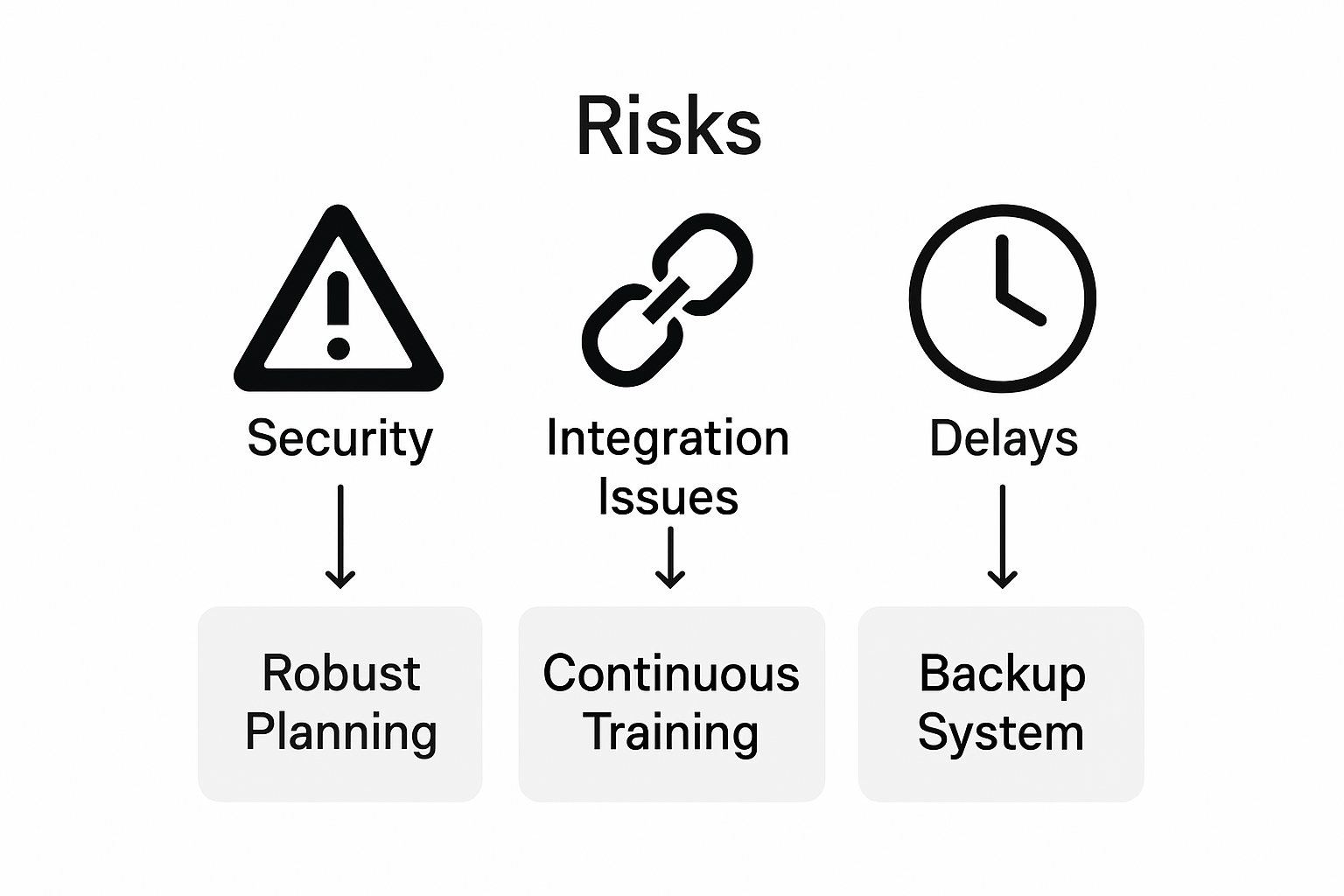
Digital transformation initiatives carry substantial inherent risks that organisations must carefully navigate. Research indicates that an alarming 95% of digital transformation efforts fail to deliver their expected benefits, underscoring the critical importance of strategic planning and meticulous implementation.
The most common transformation risks organisations encounter include:
- Inadequate strategic alignment
- Insufficient employee training and change management
- Technological infrastructure incompatibility
- Lack of clear transformation objectives
- Underestimating cultural resistance to change
- Premature or poorly planned technology investments
- Overlooking data security and privacy concerns
Comprehensive digital transformation frameworks recommend a disciplined approach that integrates data analytics, robust business architecture, and strategic DataOps practices. By anticipating potential challenges and developing comprehensive mitigation strategies, businesses can significantly improve their chances of successful digital transformation. The key is to view transformation as an ongoing, adaptive process rather than a singular, static event.
Unlock the Power of Business Process Digital Transformation Today
The article highlights the critical challenge many small businesses face: transforming traditional workflows into agile, digitalised systems that boost efficiency and reduce costly errors. With common obstacles such as cultural resistance, lack of clear goals and underutilised automation potential, navigating this complex journey can feel overwhelming. Key terms like automation, digital twins, and continuous process improvement show how essential it is to adopt intelligent, scalable solutions that adapt quickly to change.
At Fame Razak, we understand these pain points intimately. Our expertise as a Fractional CTO with deep agency roots means we specialise in turning everyday operations into seamless, automated workflows. From client onboarding to AI receptionists, we help you build smart digital frameworks tailored for your business. Discover practical ways to integrate AI and automation, minimise risk, and avoid common pitfalls by visiting our main landing page. Take the first step in transforming your business processes so you can focus on what truly matters — growing and innovating without getting bogged down in day-to-day inefficiencies. Ready to start your digital transformation journey with real, measurable results Right now is the moment to act.
Frequently Asked Questions
What is Business Process Digital Transformation?
Business Process Digital Transformation is a strategic approach that reimagines and restructures organisational workflows through advanced technological integration to enhance efficiency, agility, and overall performance.
What are the key characteristics of Business Process Digital Transformation?
Key characteristics include comprehensive technological integration, continuous process improvement, data-driven decision making, enhanced organisational flexibility, and seamless cross-functional collaboration.
How does automation enhance daily operations in digital transformation?
Automation streamlines repetitive tasks by introducing intelligent systems, allowing for improved efficiency, reduced operational risks, and enhanced decision-making capabilities through the use of technologies like artificial intelligence and digital twins.
What are some risks associated with digital transformation initiatives?
Common risks include inadequate strategic alignment, insufficient employee training, technological infrastructure incompatibility, lack of clear objectives, cultural resistance to change, poorly planned technology investments, and overlooking data security concerns.