
Nearly 90 percent of British businesses acknowledge that digital transformation is key for long-term growth, yet many still underestimate the scale of change required. In an era where every industry faces rapid shifts, understanding the true impact of technology on business models has become essential. This guide explains what business and digital transformation really mean, uncovers the technologies driving change, and highlights practical strategies tailored for British organisations determined to stay competitive.
Table of Contents
- Defining Business And Digital Transformation
- Key Technologies Powering Digital Change
- How Agencies And SMEs Benefit
- Common Barriers And Risk Factors
- Practical Steps For Sustainable Adoption
Key Takeaways
| Point | Details |
|---|---|
| Embrace Digital Transformation | Small and medium enterprises (SMEs) should view digital transformation as a strategic initiative to enhance operational processes and market engagement. |
| Leverage Key Technologies | Implementing technologies like Artificial Intelligence, IoT, and big data analytics can drive efficiency and innovation. |
| Address Barriers to Adoption | Recognising and mitigating financial, organisational, and cultural barriers is essential for successful digital integration. |
| Foster a Continuous Learning Culture | Organisations must maintain adaptability by investing in staff training and cultivating an innovative environment to sustain growth. |
Defining Business And Digital Transformation
Business and digital transformation represents a strategic reimagining of organisational processes through technological integration. More than simply adopting new technologies, it fundamentally reshapes how companies operate, compete, and deliver value to customers. Digital transformation serves as a powerful engine for economic growth by enabling organisations to fundamentally alter their operational approaches and market engagement strategies.
At its core, digital transformation involves systematically modernising corporate processes through advanced digital technologies. This encompasses three critical dimensions: technological infrastructure, operational procedures, and organisational culture. Companies undertaking this journey seek to enhance productivity, responsiveness, and innovative capabilities. Through comprehensive technological modernisation, businesses can redesign their existing models to become more agile, customer-centric, and competitive in rapidly evolving markets.
The transformation process typically involves several key strategic elements. Small and medium enterprises (SMEs) must focus on:
- Assessing current technological capabilities
- Identifying potential digital improvement areas
- Developing a comprehensive digital implementation roadmap
- Investing in staff training and change management
- Creating flexible, scalable technological infrastructure
Successful digital transformation is not about wholesale replacement of existing systems, but strategic, incremental enhancement that aligns technological investments with broader business objectives. By understanding and thoughtfully implementing digital strategies, SMEs can unlock significant competitive advantages and position themselves for sustainable growth in an increasingly digital business landscape.
Key Technologies Powering Digital Change
Emerging digital technologies are fundamentally reshaping how small and medium enterprises (SMEs) operate, compete, and innovate. At the forefront of this technological revolution are several transformative technologies that enable businesses to enhance operational efficiency, customer engagement, and strategic decision-making. Artificial intelligence, machine learning, Internet of Things (IoT), big data analytics, and advanced network technologies are driving unprecedented opportunities for organisational growth and digital transformation.

The core technological enablers of digital change encompass a range of sophisticated digital solutions. Artificial intelligence and machine learning algorithms provide intelligent automation, predictive insights, and advanced data processing capabilities. IoT technologies enable real-time monitoring and interconnected systems, allowing businesses to gather granular operational data and optimise processes. Big data analytics transforms raw information into strategic intelligence, helping SMEs make data-driven decisions with unprecedented precision and speed.
Technological adoption strategies for SMEs should focus on:
- Identifying specific technological requirements
- Assessing current infrastructure capabilities
- Strategically implementing information and communication technologies
- Developing staff digital literacy and skills
- Creating scalable and flexible technological ecosystems
- Ensuring robust cybersecurity measures
Successful digital transformation requires a holistic approach that integrates these technologies seamlessly into existing business models. SMEs must view technological adoption not as a one-time investment, but as an ongoing strategic journey of continuous learning, adaptation, and innovation. By thoughtfully selecting and implementing these powerful digital technologies, organisations can unlock significant competitive advantages, drive operational efficiency, and position themselves for sustainable growth in an increasingly digital business landscape.
How Agencies And SMEs Benefit
Digital transformation represents a strategic innovation process that fundamentally enhances the operational capabilities of small and medium enterprises (SMEs) and digital agencies. By integrating technological, human capital, and organisational dimensions, businesses can unlock unprecedented opportunities for growth, efficiency, and competitive advantage. This holistic approach transforms traditional business models, enabling organisations to respond more dynamically to market challenges and customer expectations.
The strategic benefits of digital transformation extend across multiple organisational dimensions. Agencies and SMEs can experience significant improvements in innovation performance through comprehensive digital adoption strategies. Digital culture and technological integration create a synergistic environment that drives continuous improvement, operational agility, and enhanced competitive positioning. Key advantages include streamlined workflows, data-driven decision-making, improved customer experiences, and the ability to quickly adapt to emerging market trends.
Critical benefits for agencies and SMEs include:
- Enhanced operational efficiency
- Improved customer engagement capabilities
- Reduced operational costs
- Accelerated innovation cycles
- Greater market responsiveness
- Expanded service delivery potential
- More sophisticated data analytics
- Improved talent attraction and retention
Successful digital transformation requires a nuanced approach that balances technological investment with strategic human capital development. SMEs and agencies must view digital transformation not as a technological upgrade, but as a comprehensive organisational strategy. By embracing digital technologies, cultivating a progressive digital culture, and continuously adapting to technological innovations, businesses can create robust, future-ready organisational ecosystems that thrive in an increasingly complex and competitive business landscape.
Common Barriers And Risk Factors
Digital transformation barriers present significant challenges for small and medium enterprises (SMEs) seeking to modernise their operational frameworks. These obstacles encompass technological, financial, organisational, and human capital dimensions that can impede successful digital adoption. Understanding these barriers is crucial for developing strategic approaches that mitigate risks and create sustainable digital transformation pathways.
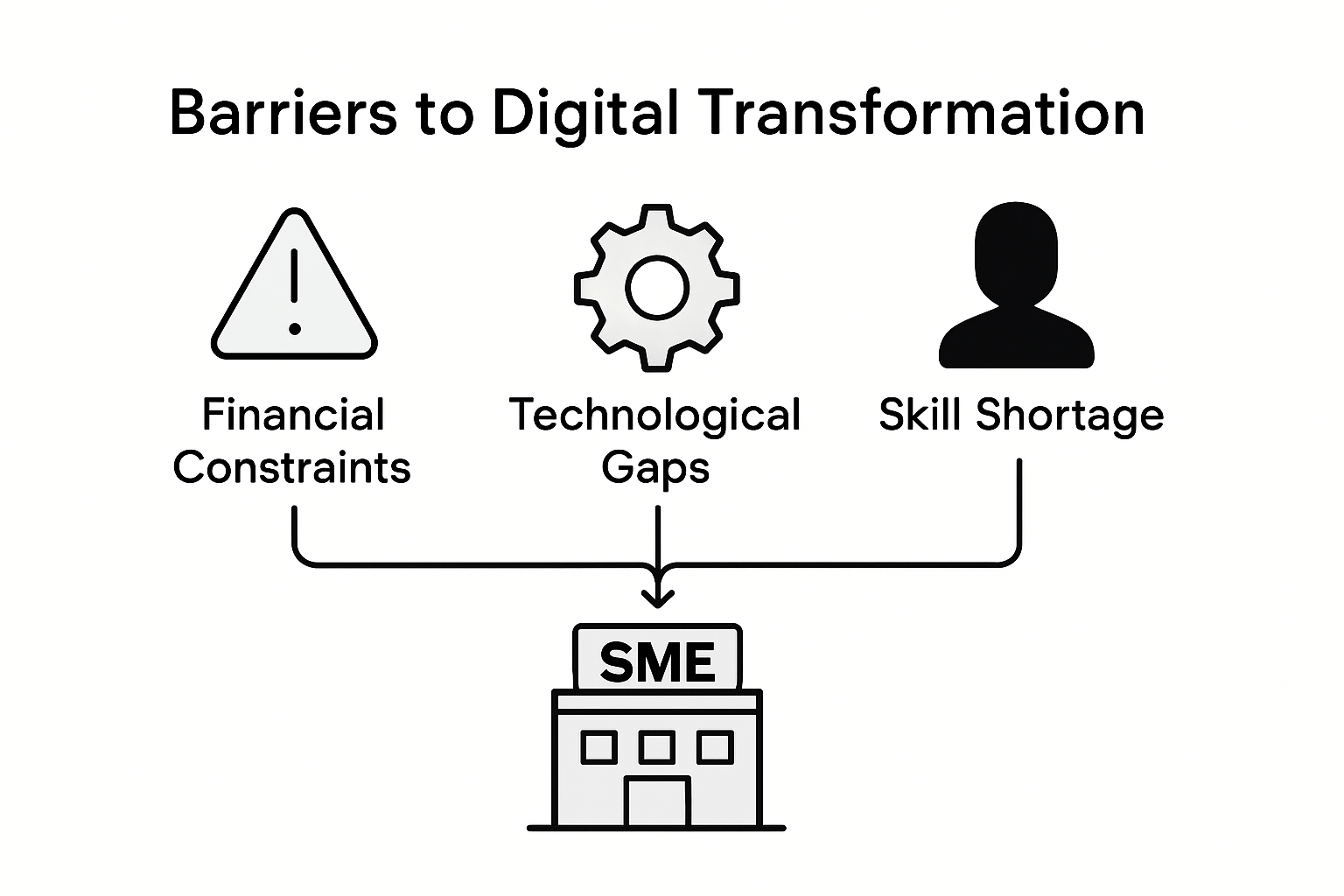
The primary risk factors in digital transformation are multifaceted and complex. Research indicates that organisational size, management background, and internationalisation strategies significantly influence digital technology adoption. Key challenges include limited financial resources, skills gaps, resistance to technological change, legacy system constraints, and inadequate strategic planning. Small businesses often struggle with understanding which technologies to implement, how to integrate them effectively, and managing the cultural shift required for successful digital transformation.
Critical barriers SMEs encounter include:
- Limited financial investment capabilities
- Insufficient technological infrastructure
- Skill and knowledge deficits
- Cultural resistance to change
- Complex technological integration challenges
- Cybersecurity and data protection concerns
- Lack of clear digital strategy
- Inadequate leadership vision
Mitigating these risks requires a comprehensive, strategic approach that addresses technological, human, and organisational dimensions. SMEs must develop adaptive strategies, invest in continuous staff training, create flexible technological frameworks, and cultivate a culture of innovation and learning. By proactively identifying and addressing potential barriers, organisations can transform digital transformation challenges into opportunities for growth, efficiency, and competitive advantage.
Practical Steps For Sustainable Adoption
Digital transformation frameworks for small and medium enterprises require a strategic, systematic approach that goes beyond mere technological implementation. Successful adoption demands comprehensive planning, organisational alignment, and a holistic understanding of technological integration. SMEs must develop a nuanced strategy that considers technological capabilities, human capital development, and long-term business objectives.
The implementation roadmap for sustainable digital transformation involves multiple interconnected dimensions. Cybersecurity policies and intelligent technological frameworks play a critical role in ensuring robust and secure digital adoption. Key strategic steps include conducting comprehensive technological audits, identifying specific organisational needs, developing tailored digital strategies, and creating adaptive implementation plans that allow for continuous learning and adjustment.
Practical steps for sustainable digital adoption include:
- Conducting a comprehensive digital readiness assessment
- Developing a clear, realistic digital transformation strategy
- Identifying specific technological requirements
- Creating a phased implementation approach
- Investing in staff training and digital literacy
- Establishing robust cybersecurity protocols
- Building flexible technological infrastructure
- Implementing continuous monitoring and evaluation mechanisms
- Fostering a culture of innovation and adaptability
- Allocating dedicated resources for digital transformation
Successful digital transformation is an evolutionary process that requires ongoing commitment, strategic investment, and organisational agility. SMEs must approach technological adoption as a continuous journey of learning, adaptation, and innovation. By developing comprehensive strategies, investing in human capital, and maintaining a flexible approach to technological integration, organisations can create sustainable digital ecosystems that drive competitive advantage and long-term business growth.
Unlock Seamless Digital Transformation for Your SME
The challenges highlighted in “Business And Digital Transformation – Impact On Modern SMEs” resonate deeply with many small and medium enterprises striving to overcome barriers such as limited resources, skill gaps, and the need for scalable, flexible technology. If you find yourself needing to modernise processes without overwhelming complexity or costs, integrating AI-powered automation and intelligent workflows can be transformative. These practical solutions address critical pain points like operational inefficiency and resistance to change while fostering a culture of innovation.
At Fame Razak, we specialise in helping small businesses and agencies automate time-consuming tasks like client onboarding and scheduling, enabling you to focus on growth and creativity. Our approach, grounded in fractional CTO leadership and deep agency experience, ensures that your digital transformation journey is strategic, sustainable, and tailored to your unique needs. Discover how to build smart systems that amplify your capabilities by visiting Fame Razak, where you can explore proven strategies to overcome digital transformation risks and unlock competitive advantage today.
Take the next step towards evolving your SME into a future-ready organisation by learning how to integrate intelligent automation with expert guidance at Fame Razak. Don’t let operational hurdles hold you back when effective digital transformation is within reach.
Frequently Asked Questions
What is digital transformation in the context of SMEs?
Digital transformation for SMEs involves the integration of advanced digital technologies into their operational processes to enhance efficiency, adaptability, and customer engagement while reshaping their business models.
What are the key technologies driving digital transformation for SMEs?
Key technologies include artificial intelligence, machine learning, Internet of Things (IoT), big data analytics, and advanced network technologies, all of which help SMEs improve operational efficiency and make data-driven decisions.
What are the common barriers to digital transformation for small and medium enterprises?
Common barriers include limited financial resources, insufficient technological infrastructure, skill deficits, resistance to change, and a lack of clear strategic direction for digital initiatives.
How can SMEs ensure sustainable adoption of digital transformation?
SMEs can ensure sustainable adoption by conducting digital readiness assessments, developing clear strategies, investing in staff training, implementing robust cybersecurity protocols, and creating flexible technological infrastructures.
Recommended
- Business Process Digital Transformation – Boosting Real-World Efficiency – Fame Razak
- Digital Transformation Checklist for Small Businesses Success – Fame Razak
- Complete Guide to Digital Transformation in Business – Fame Razak
- Digital Transformation: Turning Operations into Intelligent Workflows – Fame Razak