
B2B Digital Marketing – Automating Client Acquisition
Most british healthcare clinics in London struggle to keep pace with rapid shifts in B2B digital marketing. More than 60 percent now rely on advanced automation and AI to compete against larger organisations. For digital marketing managers, understanding how modern B2B strategies move beyond basic online ads is essential. This guide highlights practical solutions for building long-term business relationships and improving client retention using the latest technology in a competitive British market.
Table of Contents
- B2B Digital Marketing Defined And Misunderstood
- Major Channels And Strategies For B2B
- AI And Automation In B2B Processes
- Key Challenges For Small Healthcare Clinics
- Common Pitfalls And Legal Compliance Requirements
Key Takeaways
| Point | Details |
|---|---|
| B2B Digital Marketing is Multifaceted | It involves targeted communication and strategic engagement, shifting focus from transactions to building relationships. |
| Embrace Advanced Technologies | Utilise AI and automation to enhance customer interaction and improve operational efficiency. |
| Focus on Content and SEO | Develop a strong content marketing strategy combined with effective SEO to boost visibility and establish authority. |
| Ensure Legal Compliance | Maintain rigorous compliance with data protection laws and marketing regulations to mitigate risks and build trust. |
B2B digital marketing defined and misunderstood
B2B digital marketing represents far more than simple business transactions. At its core, this strategic approach focuses on connecting businesses through sophisticated digital channels, transforming how organisations communicate, collaborate, and convert potential clients. Digital marketing in B2B has evolved from transactional interactions to emphasising complex relationship dynamics, creating intricate virtual business ecosystems.
Traditionally misunderstood as mere online advertising, B2B digital marketing actually encompasses a comprehensive strategy of targeted communication, data-driven insights, and strategic engagement. Modern approaches leverage advanced technologies to segment audiences, personalise interactions, and build meaningful professional relationships. These strategies go beyond simple lead generation, focusing instead on creating value through intelligent, contextualised marketing techniques that address specific business needs.
Successful B2B digital marketing requires understanding complex market dynamics, utilising robust data analysis, and developing nuanced content strategies. Content marketing plays a crucial role in building trust and establishing strong brand credibility, enabling businesses to demonstrate expertise and solve potential client challenges before direct engagement. This approach demands deep industry knowledge, technical proficiency, and a strategic mindset that prioritises long-term relationship development over short-term transactional gains.
Expert Tip: Invest in developing detailed buyer personas and mapping comprehensive customer journeys to create more targeted, effective B2B digital marketing strategies.
Major channels and strategies for B2B
B2B digital marketing channels have dramatically transformed, moving beyond traditional communication methods to embrace sophisticated, technology-driven approaches. Digital marketing strategies now encompass a multifaceted approach integrating content marketing, social media, email marketing, and targeted digital advertising, creating comprehensive ecosystems for business engagement.
Key digital channels for B2B marketing include content marketing, which allows businesses to demonstrate expertise and build trust, social media platforms for professional networking, and targeted email marketing campaigns. Search engine optimisation (SEO) and paid media strategies have become crucial for visibility, enabling organisations to reach precise audience segments. These channels work synergistically to create a robust digital presence that attracts and nurtures potential business clients.
Electronic marketing orientation requires developing sophisticated social media capabilities and value co-creation strategies, moving beyond traditional transactional approaches. This means creating interactive, relationship-driven marketing that focuses on solving client challenges, sharing industry insights, and establishing thought leadership. Successful B2B digital marketing now demands a holistic approach that combines technical proficiency, strategic communication, and deep understanding of target business ecosystems.
Expert Tip: Develop a comprehensive multi-channel digital marketing strategy that integrates content, social media, and targeted advertising to create a cohesive and engaging professional narrative.
Here is a summary of how key B2B digital marketing channels impact business objectives:
| Channel | Main Purpose | Typical Outcome |
|---|---|---|
| Content Marketing | Build authority and trust | Informed, engaged prospects |
| Social Media | Networking and thought leadership | Broader professional reach |
| Email Marketing | Direct, targeted communication | Nurtured business relationships |
| Paid Search/SEO | Improve online visibility | Increased qualified leads |
| Digital Advertising | Accelerate brand awareness | Faster campaign results |
AI and automation in B2B processes
Artificial intelligence is revolutionising B2B marketing processes, transforming how businesses approach customer engagement, operational efficiency, and strategic decision-making. AI technologies enable organisations to move beyond traditional marketing approaches, providing unprecedented insights and capabilities that dramatically enhance customer interaction and business performance.

Key AI applications in B2B marketing include predictive analytics, sophisticated customer segmentation, and intelligent lead scoring mechanisms. These technological innovations drive operational efficiency by automating routine tasks and enabling more precise targeting strategies, allowing businesses to allocate resources more strategically. Advanced machine learning algorithms can now predict customer behaviour, personalise content, and identify potential high-value client opportunities with remarkable accuracy.
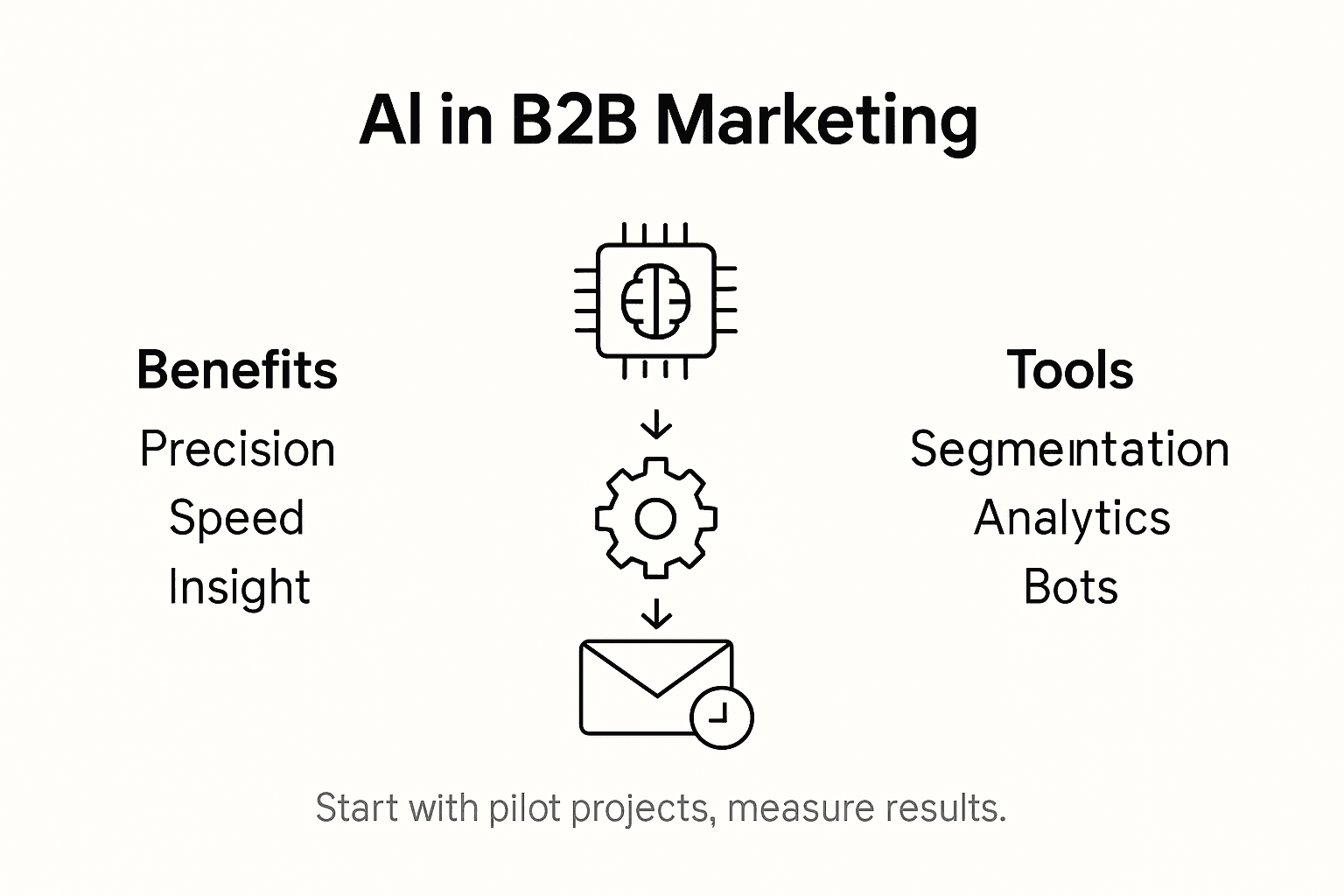
Despite the immense potential, successful AI integration requires addressing significant organisational challenges. These include complex technology infrastructure requirements, robust data privacy protocols, and managing fundamental organisational change. Businesses must invest in comprehensive training, develop adaptive technological frameworks, and create cultural environments that embrace technological innovation while maintaining human expertise and strategic oversight.
Expert Tip: Implement a phased AI adoption strategy that begins with pilot projects, measures specific performance metrics, and gradually expands automation capabilities across different business functions.
The following table outlines major AI applications in B2B marketing and their benefits:
| AI Application | How It Helps | Typical Business Benefit |
|---|---|---|
| Predictive Analytics | Forecast customer behaviour | Higher conversion rates |
| Customer Segmentation | Identify high-value groups | More personalised campaigns |
| Lead Scoring | Rank prospects by potential | Efficient resource allocation |
| Content Personalisation | Tailor messaging dynamically | Improved engagement levels |
Key challenges for small healthcare clinics
Small healthcare clinics face unprecedented digital transformation challenges, requiring strategic adaptation to rapidly changing technological and patient engagement landscapes. The COVID-19 pandemic has dramatically accelerated digital adoption, forcing independent clinics to reimagine their marketing and patient communication strategies while navigating complex regulatory environments.
Independent clinics encounter significant obstacles in competing against larger healthcare organisations, particularly in digital marketing and online visibility. Strategic search engine optimisation and targeted content marketing have become critical for small clinics seeking to attract and retain patients, especially when operating with limited marketing budgets. These challenges demand innovative approaches that leverage technology while maintaining the personalised care that distinguishes smaller healthcare providers.
The most pressing challenges include maintaining robust data privacy protocols, developing credible online content, implementing cost-effective digital marketing strategies, and creating meaningful patient engagement channels. Clinics must invest in digital capabilities that demonstrate expertise, build trust, and differentiate themselves in an increasingly competitive healthcare marketplace. This requires a nuanced approach that balances technological innovation with the human-centric nature of healthcare services.
Expert Tip: Develop a targeted digital marketing strategy that emphasises your clinic’s unique strengths, leveraging local SEO and patient-focused content to build trust and visibility.
Common pitfalls and legal compliance requirements
Digital marketing strategies introduce complex legal challenges that businesses must carefully navigate, encompassing multiple regulatory domains and potential compliance risks. Modern organisations must develop sophisticated approaches to address consumer protection, data privacy regulations, and intellectual property considerations while maintaining ethical marketing practices.
Key legal compliance requirements for B2B digital marketing centre on several critical areas. Businesses must obtain explicit consent for data usage, ensure transparency in communication, and maintain comprehensive documentation of compliance efforts, with particular attention to international regulations such as GDPR and CCPA. Non-compliance can result in substantial financial penalties, reputational damage, and potential legal proceedings that could critically impact business operations.
Specific compliance pitfalls include inadequate data protection mechanisms, misleading advertising claims, improper intellectual property usage, and insufficient consent management processes. Organisations must develop robust internal protocols that continuously monitor and update marketing practices to align with evolving legal standards. This requires cross-functional collaboration between legal, marketing, and technology teams to create comprehensive compliance frameworks that protect both the business and its potential clients.
Expert Tip: Develop a comprehensive compliance audit checklist that reviews all digital marketing materials quarterly, ensuring alignment with current legal requirements and minimising potential regulatory risks.
Transform Your B2B Marketing With Automation and AI
The challenges highlighted in this article show how complex B2B digital marketing has become, especially when trying to automate client acquisition and build meaningful relationships. Key pain points like managing multi-channel strategies, integrating AI for personalised customer interactions, and overcoming limited resources are common hurdles for businesses seeking growth. Terms such as predictive analytics, lead scoring, and workflow orchestration are no longer optional but essential aspects of a winning marketing strategy.
At Fame Razak, we understand the pressure of turning complex marketing processes into scalable, intelligent systems. Our solutions help you automate repetitive tasks such as client onboarding, scheduling, and AI-powered reception, freeing your team to focus on strategic engagement and relationship building. Whether you want to implement AI-driven lead scoring or streamline your workflow, we specialise in creating practical systems tailored to your needs.
Ready to overcome your digital marketing roadblocks and accelerate client acquisition? Explore how our expertise as a Fractional CTO can transform your operations through automation and AI. Visit Fame Razak today and take the first step towards a smarter, more efficient B2B marketing approach.
Frequently Asked Questions
What is B2B digital marketing?
B2B digital marketing is a strategic approach that focuses on connecting businesses through various digital channels, emphasising relationship building, targeted communication, and data-driven insights rather than just transactional interactions.
How can artificial intelligence enhance B2B marketing efforts?
Artificial intelligence can improve B2B marketing by providing predictive analytics, sophisticated customer segmentation, and intelligent lead scoring, enabling organisations to personalise their marketing strategies and enhance operational efficiency.
What are some key components of a successful B2B digital marketing strategy?
A successful B2B digital marketing strategy includes content marketing, social media engagement, email marketing, SEO, and targeted digital advertising, all working together to attract and nurture potential clients.
What challenges do small healthcare clinics face in B2B digital marketing?
Small healthcare clinics often struggle with limited marketing budgets, maintaining robust data privacy protocols, and developing credible online content while aiming to compete effectively against larger healthcare organisations.
Recommended
- Basic Digital Marketing Concepts: What Every Service Business Needs to Know – Fame Razak
- Digital and Social Media Marketing – Driving Growth in Health and Wellness – Fame Razak
- Digital Marketing Strategy: Real Impact for Small Businesses – Fame Razak
- 7 Top Digital Agency Challenges and How to Overcome Them – Fame Razak